
Fasting and Spiritual Discipline

Lesson Information
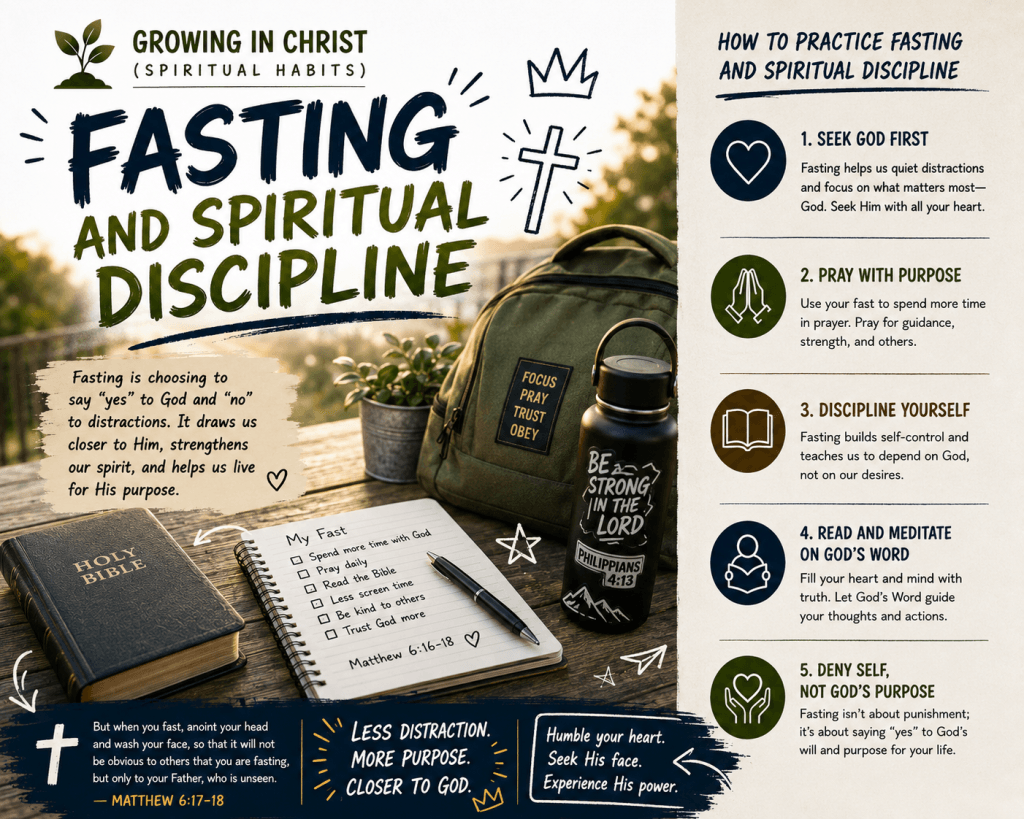
This lesson helps learners understand Fasting and Spiritual Discipline through the truth of Scripture. Using Matthew 6:16–18 as the foundation, the lesson connects biblical meaning with everyday discipleship so adults, youth, and children can understand what God says, why it matters, and how to live it out through Fasting, Discipline, Repentance, Self-Control, and Devotion.
Content

Scripture Reading
- These notes are personal and are not shared.
- These notes are personal and are not shared.
- These notes are personal and are not shared.
- These notes are personal and are not shared.
- These notes are personal and are not shared.
- These notes are personal and are not shared.
Adult Passage 1
Study Topics
Choose a topic to search Scripture.
Biblical Theme Explorer
Browse the major themes, doctrines, people, places, events, and keywords connected through Harvest Bible studies.
Original Language Study
Open deeper study tools for the current chapter using BibleHub resources.
My Notes
Notes are saved in this browser for now.
Adult Explanation
In the Sermon on the Mount, Jesus teaches His disciples about genuine righteousness. He addresses common spiritual practices such as giving, prayer, and fasting. In this passage, Jesus assumes that His followers will fast, but He warns against fasting for the purpose of gaining attention or admiration from others. Some religious leaders made their fasting obvious so people would notice their sacrifice and praise their devotion. Jesus teaches that true fasting is directed toward God, not toward impressing people. Fasting is a spiritual discipline that helps believers focus on God, deepen dependence upon Him, and cultivate a heart of humble devotion.
Focus on the Scripture
The main truth is that fasting should be practiced with sincerity and a desire to draw near to God. Adults should pay close attention to Jesus' warning against spiritual hypocrisy. Fasting is not about appearing spiritual but about seeking God with a humble and devoted heart. The value of fasting is found in the relationship it strengthens with God, not in the recognition it receives from others.
Adult Exegesis
Keyword Study
Fast — Greek: <em>nesteuo</em> (nest-YOO-oh). This word means to abstain from food for a spiritual purpose. Biblical fasting is connected to prayer, dependence on God, repentance, and seeking His will.
Reward — Greek: <em>misthos</em> (mis-THOS). This word means reward, compensation, or recognition. Jesus contrasts human praise with the spiritual reward that comes from God.
Jesus does not condemn fasting itself. Instead, He corrects wrong motives. The religious leaders were turning a God-centered discipline into a public performance. Their goal was not deeper fellowship with God but approval from people. Jesus teaches that spiritual disciplines lose their value when they become tools for self-promotion.
The instruction to wash one's face and appear normal emphasizes that fasting is primarily a matter between the believer and God. This does not mean fasting must always be secret, since Scripture records corporate fasts, but it does mean that personal fasting should be marked by humility rather than self-display. God sees what others cannot see and knows the true motives of the heart.
This passage fits into the larger biblical teaching that God desires sincere devotion rather than empty religious activity. Fasting becomes meaningful when it helps believers focus on prayer, dependence, repentance, and worship. It trains the heart to value God above physical comforts and personal recognition.
Adult Application
* Fast with the goal of seeking God rather than gaining attention or recognition from others.
* Pair fasting with prayer and Scripture reading to deepen your focus on the Lord.
* Examine your motives in spiritual disciplines and ask God to purify your heart.
* Use fasting as an opportunity to practice self-control and dependence on God.
* Remember that God sees faithful devotion even when no one else notices.
---
Adult Passage 2
Study Topics
Choose a topic to search Scripture.
Biblical Theme Explorer
Browse the major themes, doctrines, people, places, events, and keywords connected through Harvest Bible studies.
Original Language Study
Open deeper study tools for the current chapter using BibleHub resources.
My Notes
Notes are saved in this browser for now.
Adult Explanation
Isaiah spoke to God's people during a time when they were practicing religious rituals while neglecting justice, compassion, and obedience. The people were fasting, yet their hearts remained unchanged. They wondered why God seemed distant despite their outward acts of devotion. Through Isaiah, God explained that the kind of fasting He desires is one that produces righteousness, mercy, and concern for others. True fasting affects both the heart and the way believers treat people around them.
Focus on the Scripture
The main truth is that genuine fasting leads to transformed living. Adults should pay attention to God's emphasis on justice, compassion, generosity, and obedience. Fasting is not simply giving something up; it is drawing closer to God in ways that change how we live and serve others. Spiritual discipline should produce visible fruit in daily life.
Adult Exegesis
Keyword Study
Loose — Hebrew: <em>pathach</em> (pah-THAKH). This word means to open, release, or set free. It highlights God's concern for removing oppression and bringing freedom.
Light — Hebrew: <em>or</em> (ore). This word refers to light, brightness, and blessing. In this passage it symbolizes God's favor, guidance, and restoration.
God rebukes the people because they had separated religious practice from practical obedience. They fasted while continuing sinful behavior and neglecting those in need. The Lord reminds them that worship and righteousness cannot be divided. Spiritual disciplines should lead to greater love for God and neighbor.
The passage reveals that God values a heart that responds to His character. Since God is compassionate, His people should be compassionate. Since God cares for the oppressed, His people should care for the oppressed. Fasting becomes meaningful when it helps align the believer's heart with God's priorities.
Isaiah also includes powerful promises. God promises guidance, healing, provision, and blessing for those who seek Him sincerely and live out their faith. These promises do not teach that fasting earns God's favor, but they show that God delights in hearts that pursue Him with genuine devotion and obedience.
Adult Application
* Allow times of fasting to increase your compassion for people who are hurting or in need.
* Use money or time saved through fasting to bless someone else in a practical way.
* Ask God to reveal areas where religious habits have replaced genuine obedience.
* Combine fasting with acts of service, generosity, and mercy toward others.
* Seek spiritual growth that changes both your heart and your actions.
---
Adult Passage 3
Study Topics
Choose a topic to search Scripture.
Biblical Theme Explorer
Browse the major themes, doctrines, people, places, events, and keywords connected through Harvest Bible studies.
Original Language Study
Open deeper study tools for the current chapter using BibleHub resources.
My Notes
Notes are saved in this browser for now.
Adult Explanation
The prophet Joel called the people of Judah to respond to a time of judgment and spiritual crisis. The nation had drifted from God and needed repentance. In this passage, the Lord invites His people to return to Him with all their hearts through fasting, mourning, and sincere repentance. Yet God makes it clear that outward expressions alone are not enough. The true issue is the condition of the heart. God's desire is not simply religious activity but wholehearted devotion and genuine return to Him.
Focus on the Scripture
The main command is to return to the Lord with sincerity and repentance. Adults should pay attention to God's call for heart-level change. Fasting is valuable when it reflects a genuine desire to seek God, confess sin, and renew fellowship with Him. True spiritual discipline begins with a heart that is surrendered to the Lord.
Adult Exegesis
Keyword Study
Return — Hebrew: <em>shuv</em> (shoov). This word means to turn back, return, or repent. It describes a deliberate change of direction toward God.
Heart — Hebrew: <em>leb</em> (lev). This word refers to the inner person, including thoughts, desires, will, and affections. God focuses on inward transformation rather than outward appearance.
Joel's message emphasizes God's grace even in the midst of warning. The call to repentance is not given because God delights in judgment but because He desires restoration. Fasting in this context becomes an expression of humility and dependence as people acknowledge their need for God's mercy.
The command to rend the heart rather than garments highlights the difference between external religion and genuine repentance. In ancient times, tearing garments was a sign of grief or sorrow. God teaches that outward signs are meaningless if the heart remains unchanged. He desires authentic repentance that reaches the deepest parts of life.
This passage reveals God's compassionate character. Joel reminds the people that the Lord is gracious, compassionate, slow to anger, and abounding in lovingkindness. The purpose of repentance and fasting is not to persuade an unwilling God to be merciful but to return to the God who already delights in showing mercy to those who seek Him.
Adult Application
* Use fasting as a time to examine your heart before God and confess sin honestly.
* Ask God to reveal areas where outward religion has replaced genuine devotion.
* Return quickly to God whenever you recognize spiritual drift or disobedience.
* Focus on heart transformation rather than simply completing a spiritual practice.
* Remember God's grace and mercy as you seek Him through prayer, repentance, and fasting.
Adult Passage 4
Study Topics
Choose a topic to search Scripture.
Biblical Theme Explorer
Browse the major themes, doctrines, people, places, events, and keywords connected through Harvest Bible studies.
Original Language Study
Open deeper study tools for the current chapter using BibleHub resources.
My Notes
Notes are saved in this browser for now.
Adult Explanation
Acts 13 records a significant moment in the early church as believers in Antioch were worshiping the Lord and fasting. In the middle of their spiritual devotion, the Holy Spirit directed the church to set apart Barnabas and Saul for the missionary work God had called them to do. The church responded with more fasting, prayer, and the laying on of hands before sending them out. This passage shows that fasting was not treated as an empty ritual but as part of worship, dependence, discernment, and obedience to God's mission. Fasting helped the church seek God's direction and submit to His will together.
Focus on the Scripture
The main truth is that fasting and prayer help believers seek God’s guidance with surrendered hearts. Adults should pay attention to the connection between worship, fasting, prayer, and obedience. The church did not fast to appear spiritual; they fasted as they ministered to the Lord and listened for His direction. Spiritual discipline becomes fruitful when it leads to obedience and participation in God’s work.
Adult Exegesis
Keyword Study
Ministering — Greek: <em>leitourgeo</em> (lay-toor-GEH-oh). This word means to serve, minister, or perform sacred service. In this passage, it shows that the church’s worship and fasting were acts of devotion offered to the Lord.
Set Apart — Greek: <em>aphorizo</em> (ah-fo-REE-zoh). This word means to separate, appoint, or mark off for a specific purpose. It highlights God’s calling and the church’s responsibility to recognize and obey His direction.
The Antioch church models spiritual attentiveness. Their fasting took place in the context of worship, not crisis alone. They were not using fasting to force God’s hand but placing themselves in a posture of dependence and readiness. This shows that fasting can sharpen spiritual focus when believers desire to hear and obey God’s will.
The Holy Spirit’s direction came to the gathered church, reminding believers that spiritual disciplines are not only individual practices. Fasting and prayer can be practiced together as the body of Christ seeks wisdom, confirms calling, and prepares for ministry. The church’s response was reverent and obedient; they continued in prayer and fasting before sending Barnabas and Saul out.
This passage also connects fasting to mission. Spiritual discipline should not make believers inward-focused or isolated from God’s purposes. Instead, fasting and prayer can prepare the church to send, serve, give, go, and obey. True devotion moves outward in faithful participation in the gospel.
Adult Application
* Practice fasting when seeking God’s guidance for major decisions, ministry direction, or seasons of discernment.
* Pair fasting with worship and prayer rather than treating it as a stand-alone act of self-denial.
* Invite trusted believers to pray with you when seeking God’s direction in important matters.
* Be willing to obey God’s leading when fasting and prayer reveal a next step of service or surrender.
* Remember that spiritual discipline should prepare you for mission, not simply private reflection.
---
Adult Passage 5
Study Topics
Choose a topic to search Scripture.
Biblical Theme Explorer
Browse the major themes, doctrines, people, places, events, and keywords connected through Harvest Bible studies.
Original Language Study
Open deeper study tools for the current chapter using BibleHub resources.
My Notes
Notes are saved in this browser for now.
Adult Explanation
In 1 Corinthians 9, Paul describes his ministry with urgency, self-denial, and purpose. He uses the imagery of athletic competition to explain the disciplined life of a believer. Athletes train with focus because they desire a prize that will not last. Christians pursue an imperishable reward and therefore should live with spiritual seriousness, self-control, and intentionality. This passage does not teach that believers earn salvation through discipline. Rather, it shows that those who belong to Christ should not live carelessly. Spiritual discipline, including fasting, trains believers to resist the flesh and remain focused on faithful obedience.
Focus on the Scripture
The main command is to live the Christian life with purpose, self-control, and discipline. Adults should pay attention to Paul’s contrast between aimless living and intentional obedience. Fasting helps train the body and desires so that comfort, appetite, and impulse do not rule the believer. Spiritual discipline matters because discipleship requires perseverance, focus, and surrender.
Adult Exegesis
Keyword Study
Self-Control — Greek: <em>egkrateuomai</em> (eng-krah-TEH-yoo-oh-my). This word means to exercise self-control or mastery over one’s desires. It helps explain the disciplined restraint needed in the Christian life.
Discipline — Greek: <em>hypopiazo</em> (hoo-po-pee-AH-zoh). This word can mean to treat strictly, discipline, or bring under control. Paul uses strong imagery to describe bringing bodily desires under the rule of faithful obedience.
Paul’s athletic illustration teaches intentionality. No serious athlete trains randomly or casually. Training involves saying no to certain comforts for the sake of a greater goal. Likewise, believers practice spiritual disciplines not as punishment but as training for godliness. Fasting is one way Christians learn that bodily desires are real but not ultimate.
Paul’s concern is not merely personal achievement but faithful ministry. He disciplines himself so that his life and message remain consistent. This is a sober reminder that spiritual carelessness can weaken witness. A believer who teaches truth but refuses discipline may become spiritually ineffective or disqualified in service.
This passage fits the broader biblical call to deny self and follow Christ. Discipline is not opposed to grace; it is a response to grace. Because Christ has saved us, we learn to bring our appetites, habits, schedules, entertainment, speech, and priorities under His lordship. Fasting can become a practical tool for reordering desires around devotion to God.
Adult Application
* Identify one appetite, habit, or comfort that may have too much control over your choices.
* Use fasting to practice saying no to the flesh and yes to deeper dependence on God.
* Build spiritual discipline into your schedule through prayer, Scripture, worship, and intentional rest.
* Avoid aimless living by setting clear spiritual goals for obedience, service, and growth.
* Ask God to align your private habits with your public witness and ministry service.
---
Adult Passage 6
Study Topics
Choose a topic to search Scripture.
Biblical Theme Explorer
Browse the major themes, doctrines, people, places, events, and keywords connected through Harvest Bible studies.
Original Language Study
Open deeper study tools for the current chapter using BibleHub resources.
My Notes
Notes are saved in this browser for now.
Adult Explanation
Galatians 5 contrasts the works of the flesh with the fruit of the Spirit. Paul teaches that believers are not called to live under the control of sinful desires but to walk by the Spirit. The fruit of the Spirit describes the character God produces in His people as they live in dependence upon Him. This passage connects spiritual discipline with Spirit-formed transformation. Fasting and self-control do not save believers or produce holiness by human strength alone. Rather, spiritual discipline creates space to yield to the Spirit, resist the flesh, and grow in Christlike character.
Focus on the Scripture
The main truth is that the Spirit produces godly fruit in those who belong to Christ and walk with Him. Adults should pay attention to the connection between self-control and life in the Spirit. Fasting is not merely about human willpower; it is a discipline that can help believers surrender fleshly desires and depend more fully on the Holy Spirit for growth, obedience, and devotion.
Adult Exegesis
Keyword Study
Fruit — Greek: <em>karpos</em> (kar-POSS). This word means fruit, produce, or result. It describes visible evidence of the Spirit’s work in a believer’s life.
Self-Control — Greek: <em>egkrateia</em> (eng-KRAH-tay-ah). This word means mastery, restraint, or self-control. It refers to Spirit-enabled discipline over desires, impulses, and behaviors.
Paul describes the fruit of the Spirit as the character produced by God’s presence and power. These qualities are not manufactured by mere self-improvement. Love, joy, peace, patience, kindness, goodness, faithfulness, gentleness, and self-control grow as believers walk by the Spirit and yield to His work.
The passage also states that those who belong to Christ have crucified the flesh with its passions and desires. This does not mean believers no longer face temptation, but it does mean sin no longer has rightful rule over them. Spiritual discipline is one way believers actively live out this new identity by refusing to be controlled by fleshly desires.
Fasting fits within this passage as a practice of Spirit-dependent surrender. It reminds the believer that appetites must not rule the heart. Yet fasting must be joined with reliance on the Spirit, not pride in personal discipline. The goal is not simply restraint but Christlike fruit. True discipline leads to greater love, humility, patience, holiness, and devotion.
Adult Application
* Ask the Holy Spirit to grow specific fruit in your life during seasons of fasting and prayer.
* Use fasting to surrender fleshly desires and practice dependence on God rather than impulse.
* Examine whether your spiritual disciplines are producing love, patience, humility, and holiness.
* When tempted, remember that you belong to Christ and are not enslaved to the flesh.
* Walk by the Spirit daily through prayer, Scripture, repentance, and obedient choices.
---
Adult Summary
This lesson teaches that fasting and spiritual discipline are God-centered practices meant to deepen devotion, repentance, self-control, guidance, and dependence on the Lord. Matthew 6:16–18 provides the foundation by showing that fasting should not be practiced for public attention but for sincere fellowship with the Father who sees the heart. Isaiah 58:6–11 reminds believers that fasting must be connected to righteousness, mercy, justice, and compassion. Joel 2:12–13 calls God’s people to return to Him with all their hearts, showing that true fasting is tied to genuine repentance rather than outward display.Acts 13:2–3 shows the early church fasting and praying as they worshiped and sought the Holy Spirit’s direction for mission. 1 Corinthians 9:24–27 teaches that believers must live with spiritual purpose, self-control, and discipline, refusing to be ruled by appetite or comfort. Galatians 5:22–25 reminds believers that true transformation comes through walking by the Spirit, who produces fruit such as faithfulness and self-control.The big idea of the Adult lesson is that fasting is not about proving spiritual strength but about humbly seeking God, surrendering the heart, resisting the flesh, and becoming more available for obedience. The next faithful step is to choose one specific discipline—such as fasting, prayer, repentance, Scripture meditation, or self-control—and practice it with a sincere desire to draw nearer to God and live more faithfully for Christ.Adult Questions
- What do these passages together teach about the purpose of fasting and spiritual discipline in the life of a believer?Your personal thoughts are private and are not shared.
- How does the full lesson show the difference between outward religious performance and sincere devotion to God?Your personal thoughts are private and are not shared.
- Where do you most struggle with self-control, surrender, or spiritual consistency, and what might God be inviting you to bring before Him?Your personal thoughts are private and are not shared.
- What is one practical way you can practice fasting, prayer, repentance, or spiritual discipline this week with a God-centered motive?Your personal thoughts are private and are not shared.
- How can this group encourage one another to pursue discipline without pride, repentance without shame, and devotion without performance?Your personal thoughts are private and are not shared.
Adult Prayer
Scripture Reading
- These notes are personal and are not shared.
- These notes are personal and are not shared.
- These notes are personal and are not shared.
- These notes are personal and are not shared.
- These notes are personal and are not shared.
- These notes are personal and are not shared.
Youth Explanation
Jesus taught about fasting during the Sermon on the Mount. Some people in His day fasted in a way that made sure everyone noticed them. They wanted people to think they were very spiritual. Jesus warned His followers not to turn fasting into a performance. Fasting is meant to help us seek God, pray, depend on Him, and grow in devotion. It is not about impressing people.
Focus on the Scripture
The main warning is that spiritual discipline should be for God, not for attention. Teenagers should pay attention to the heart behind fasting. God cares about why we do what we do. Fasting is not about looking spiritual online, at church, or around friends. It is about quietly seeking God with sincerity.
Youth Application
* Fast or practice spiritual discipline to seek God, not to impress others.
* Pair fasting with prayer, Scripture, and honest time with God.
* Avoid posting or bragging about spiritual habits to get attention.
* Ask God to show you your motives before practicing a discipline.
* Let fasting remind you that God is more important than comfort.
---
Youth Summary
Fasting and spiritual discipline are ways believers seek God, practice self-control, and grow in devotion. Matthew 6:16–18 teaches that fasting should be done for God, not for attention. Isaiah 58 shows that true fasting should lead to compassion, justice, and changed actions. Joel 2 calls God’s people to return to Him with sincere repentance. Acts 13 shows the church fasting and praying as they sought God’s direction. 1 Corinthians 9 teaches that following Jesus takes focus and discipline. Galatians 5 reminds us that real growth comes through the Holy Spirit, who produces self-control and godly fruit.For teenagers, fasting is not about proving how spiritual you are. It is about seeking God more than comfort, turning from sin, listening for His direction, and letting the Holy Spirit shape your life. The next faithful step is to choose one simple discipline this week and practice it with prayer, humility, and a sincere desire to grow closer to God.Youth Questions
- What do these passages teach us about why fasting and spiritual discipline matter?Your personal thoughts are private and are not shared.
- How is God-centered fasting different from trying to look spiritual in front of others?Your personal thoughts are private and are not shared.
- What is one area where you struggle with self-control, repentance, or surrender?Your personal thoughts are private and are not shared.
- What spiritual discipline could you practice this week to help you seek God more sincerely?Your personal thoughts are private and are not shared.
- How can our group encourage one another to grow in discipline without pride or shame?Your personal thoughts are private and are not shared.
Youth Prayer

Scripture Reading
- These notes are personal and are not shared.
- These notes are personal and are not shared.
- These notes are personal and are not shared.
- These notes are personal and are not shared.
- These notes are personal and are not shared.
- These notes are personal and are not shared.
Children Explanation
Jesus taught His followers about fasting. Fasting means giving up food for a short time so a person can pray and focus on God. Some people wanted others to notice that they were fasting, but Jesus said fasting should be for God, not for showing off. God sees our hearts even when no one else knows what we are doing.
Focus on the Scripture
The main lesson is that God wants us to seek Him with honest hearts. Children should notice that spiritual habits are not for bragging. When we pray, obey, give something up, or do something kind, we should do it because we love God.
Children Application
* Pray to God with an honest heart.
* Do kind things without showing off.
* Ask God to help you love Him more.
* Talk to a parent before trying any kind of fast.
* Remember that God sees your heart.
---
Children Summary
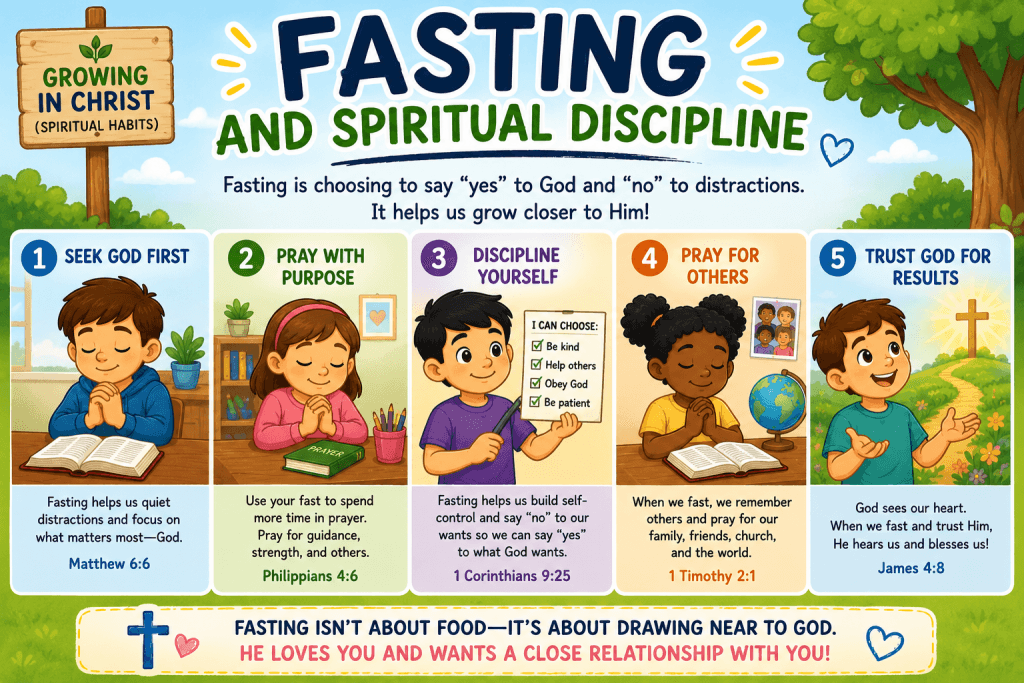
Fasting and spiritual discipline help people seek God, pray, repent, and grow. Jesus taught that fasting should be for God, not for showing off. Isaiah reminds us that loving God should help us care for others. Joel teaches us to come back to God with our whole hearts. Acts shows believers praying and fasting before serving God. Paul teaches that following Jesus takes discipline like running a race. Galatians teaches that the Holy Spirit grows good fruit in God’s people.The big lesson is that God wants our hearts. Children can grow by praying, obeying, saying sorry when they sin, helping others, practicing self-control, and trusting the Holy Spirit to help them become more like Jesus.Children Questions
- What did we learn about fasting, prayer, and discipline?Your personal thoughts are private and are not shared.
- Why does God care about our hearts and not just what people see?Your personal thoughts are private and are not shared.
- When is it hard for you to say no to wrong choices and yes to God?Your personal thoughts are private and are not shared.
- What is one good spiritual habit you can practice this week?Your personal thoughts are private and are not shared.
- How can we pray for each other to grow in self-control, kindness, and obedience?Your personal thoughts are private and are not shared.
Children Prayer
Children Printable Images
These images are provided as printable lesson pages for children.


Children Coloring Pages
These coloring pages are provided as printable activities for children.

Ready to Finish?
Mark this lesson complete to update your My Harvest progress.