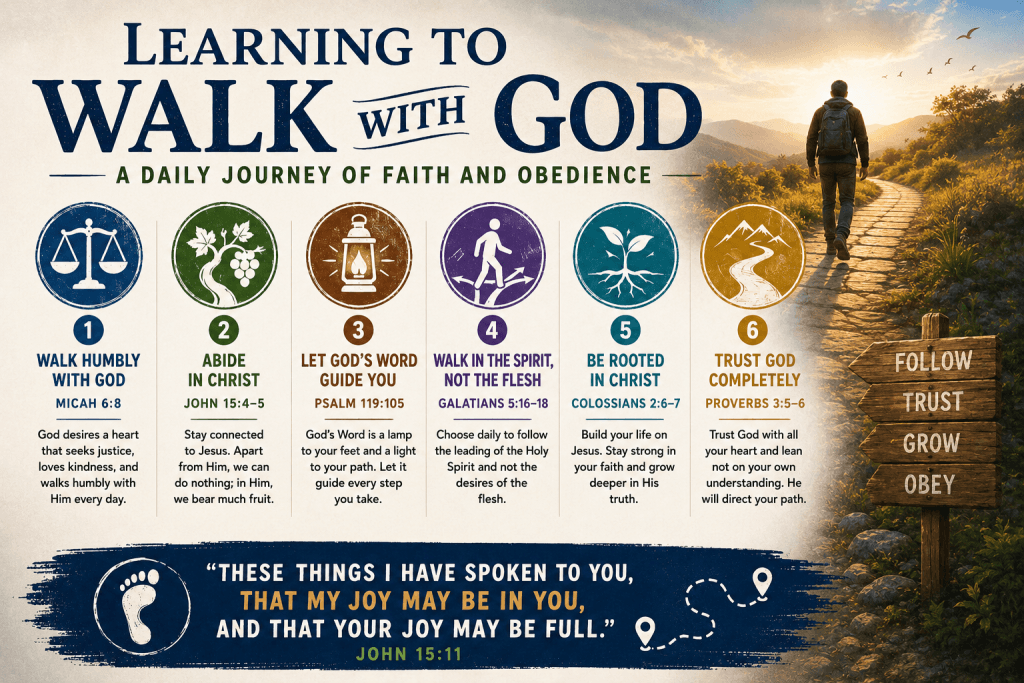
Learning to Walk with God
Lesson Information
This lesson helps learners understand the next faithful steps after responding to Christ. Using Micah 6:8 as the foundation, the lesson explains that growing in faith is not a one-time decision but a daily walk with Jesus through Faith, Trusting God, Obedience, Perseverance, and Walking with Christ. Learners will be encouraged to move from simply knowing about faith to actively living as disciples who trust God, obey His Word, stay connected to the church, and help others follow Christ.
Content
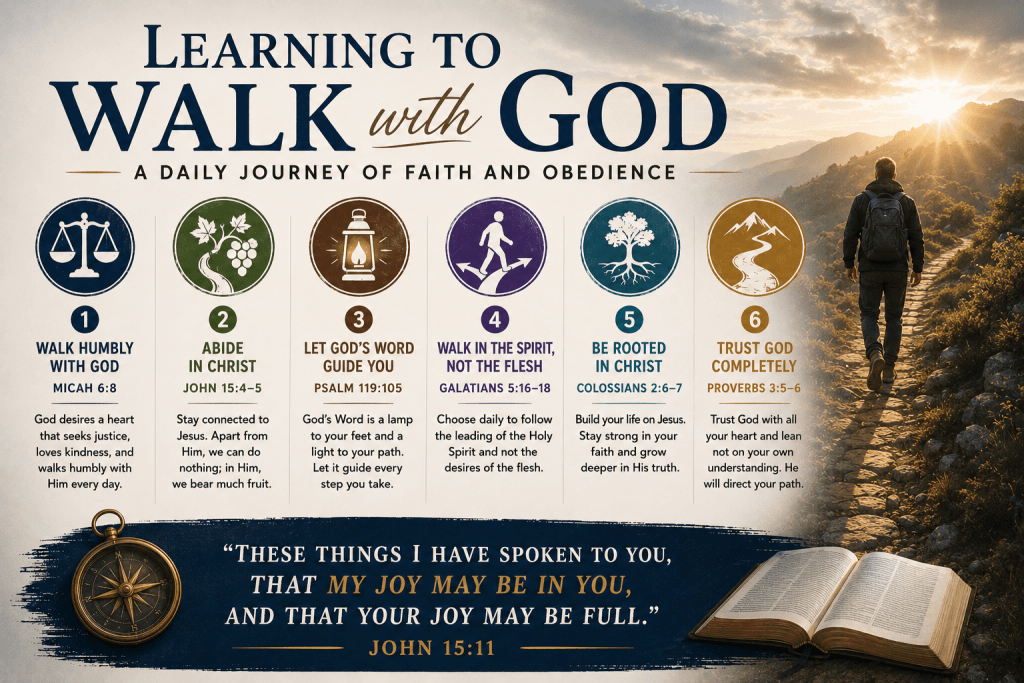
Scripture Reading
- These notes are personal and are not shared.
- These notes are personal and are not shared.
- These notes are personal and are not shared.
- These notes are personal and are not shared.
- These notes are personal and are not shared.
- These notes are personal and are not shared.
Adult Passage 1
Adult Explanation
The prophet Micah ministered during a time when God's people were outwardly religious but inwardly drifting from Him. The people believed that religious ceremonies and sacrifices could replace genuine obedience and devotion. Through Micah, God reminded His people that He was not primarily looking for rituals but for hearts that reflected His character. Micah 6:8 serves as a powerful summary of what God desires from those who belong to Him. It reveals that walking with God is not complicated, but it does require daily faithfulness, humility, and obedience. This passage forms an excellent foundation for understanding what it means to grow in faith and follow God day by day.
Focus on the Scripture
The central focus of this passage is God's call for believers to do justice, love kindness, and walk humbly with Him. This passage matters because it shifts attention away from merely knowing about God and toward actively living in relationship with Him. Walking with God involves trusting Him, obeying His Word, treating others rightly, and maintaining a humble dependence upon Him every day.
Adult Exegesis
Keyword Study
Justice (Hebrew: *mishpat*) — Refers to righteousness, fairness, and acting according to God's standards. It emphasizes living in a way that reflects God's character toward others.
Walk (Hebrew: *halak*) — Often used throughout the Old Testament to describe a person's daily conduct, lifestyle, and relationship with God. Walking with God implies ongoing fellowship, obedience, and faithful living.
Micah's message confronts the idea that religious activity alone pleases God. The people were asking what sacrifices they should bring, but God pointed them toward transformed living. True worship is demonstrated through obedience and a life that reflects God's values. This teaching remains important because believers can sometimes substitute religious habits for genuine discipleship.
The command to love kindness reveals God's desire for His people to reflect His mercy toward others. Kindness is more than occasional good deeds; it is a lifestyle shaped by compassion, patience, and grace. Walking with God naturally affects how believers interact with family members, coworkers, church members, and strangers.
The phrase "walk humbly with your God" highlights the heart of discipleship. Humility recognizes dependence upon God rather than self-sufficiency. Throughout Scripture, those who walked closely with God understood their need for His guidance, wisdom, and strength. Spiritual growth occurs when believers continually submit their lives to Him.
Adult Application
* Practice daily obedience by asking how your decisions reflect God's justice and kindness.
* Look for opportunities to show mercy and compassion in your home, workplace, and church.
* Begin each day with prayer, acknowledging your dependence upon God for guidance.
* Evaluate whether your spiritual habits are leading to genuine transformation or merely routine activity.
* Trust God's direction even when His path requires humility, patience, and perseverance.
Adult Passage 2
4 Abide in Me, and I in you. As the branch cannot bear fruit of itself unless it abides in the vine, so neither can you unless you abide in Me.
5 I am the vine, you are the branches; he who abides in Me and I in him, he bears much fruit, for apart from Me you can do nothing.
Adult Explanation
In the final hours before His crucifixion, Jesus taught His disciples important truths about the Christian life. Using the illustration of a vine and branches, He explained the relationship believers must have with Him. Just as a branch cannot survive or produce fruit apart from the vine, believers cannot experience spiritual growth apart from Christ. Jesus wanted His followers to understand that discipleship is not accomplished through human effort alone. It requires continual dependence upon Him. This passage directly connects to learning how to walk with God because it reveals the source of spiritual strength and growth.
Focus on the Scripture
The main truth of this passage is that believers must remain connected to Christ if they are to bear spiritual fruit. Christians should pay close attention to Jesus' emphasis on abiding because lasting spiritual growth, obedience, and effectiveness all flow from a close relationship with Him. Walking with God is not about self-reliance but daily dependence upon Christ.
Adult Exegesis
Keyword Study
Abide (Greek: *menō*) — To remain, stay, continue, or dwell. This word describes a continual, ongoing relationship rather than a temporary connection.
Fruit (Greek: *karpos*) — Refers to the visible results produced by a healthy spiritual life, including character, obedience, ministry, and influence for God's kingdom.
Jesus uses a simple but powerful picture that His listeners would have understood. Branches receive life, nourishment, and strength from the vine. Likewise, believers receive spiritual life and power through their relationship with Christ. Apart from Him, spiritual fruitfulness becomes impossible. This teaching removes pride because growth is ultimately dependent upon God's work.
Abiding involves more than attending church or occasionally reading Scripture. It describes a lifestyle of fellowship with Christ through prayer, obedience, worship, dependence, and trust. As believers remain connected to Him, He produces fruit that reflects His character and purposes.
Jesus' statement that believers can do nothing apart from Him highlights human weakness and divine sufficiency. Many Christians attempt to grow spiritually through determination alone, yet true transformation occurs when they depend upon Christ's power. Walking with God means continually drawing strength from the One who sustains spiritual life.
Adult Application
* Spend consistent time in prayer and Scripture to strengthen your connection with Christ.
* When facing challenges, seek Christ's guidance before relying on your own understanding.
* Evaluate whether your daily schedule leaves room for meaningful fellowship with God.
* Ask God to produce spiritual fruit in your character, relationships, and service.
* Remember that lasting spiritual growth comes through dependence on Christ, not personal effort alone.
Adult Passage 3
105 Your word is a lamp to my feet And a light to my path.
Adult Explanation
Psalm 119 is the longest chapter in Scripture and celebrates the value, truth, and guidance of God's Word. Throughout the psalm, the writer repeatedly expresses dependence upon God's instruction for daily living. Life often presents uncertainty, difficult decisions, temptations, and unexpected challenges. Rather than relying solely on personal wisdom, the psalmist looks to God's Word for direction. This verse provides a clear picture of how believers learn to walk with God: by allowing Scripture to guide each step they take.
Focus on the Scripture
The primary focus of this passage is the guiding role of God's Word in the believer's life. Christians should pay close attention to the fact that God does not expect them to navigate life alone. He provides direction through Scripture. Walking with God requires listening to His voice, trusting His truth, and following His guidance even when the entire path is not visible.
Adult Exegesis
Keyword Study
Lamp (Hebrew: *ner*) — A small light used to illuminate darkness. It represents God's Word providing guidance and clarity in situations where direction is needed.
Path (Hebrew: *netibah*) — A road, course, or way of life. The term points to the daily journey and decisions that shape a person's walk with God.
The imagery of a lamp reminds believers that God often guides one step at a time. The lamp does not reveal the entire journey at once, but it provides enough light for faithful obedience in the present moment. This requires trust because believers frequently desire complete answers before taking action.
Scripture serves as God's authoritative guide for faith and practice. Through His Word, God reveals His character, His will, and His wisdom. The more believers immerse themselves in Scripture, the more they learn to recognize truth, resist deception, and make decisions that honor Him.
This verse also emphasizes the relationship between God's guidance and obedience. Light is beneficial only when a person follows it. Walking with God means applying biblical truth to everyday life. Spiritual growth occurs when believers not only hear God's Word but consistently follow where it leads.
Adult Application
* Develop a daily habit of reading and reflecting on God's Word.
* Turn to Scripture when facing important decisions rather than relying only on personal opinions.
* Memorize verses that strengthen your faith and guide your daily walk.
* Ask God to reveal areas where you know His truth but have not yet obeyed it.
* Trust God's guidance one step at a time, even when you cannot see the entire path ahead.
Adult Passage 4
16 But I say, walk by the Spirit, and you will not carry out the desire of the flesh.
17 For the flesh sets its desire against the Spirit, and the Spirit against the flesh; for these are in opposition to one another, so that you may not do the things that you please.
18 But if you are led by the Spirit, you are not under the Law.
Adult Explanation
Paul wrote Galatians to defend the truth of the gospel and to show believers how to live in freedom through Christ. After explaining that Christians are not saved by keeping the law, Paul teaches that freedom in Christ is not permission to live selfishly or sinfully. Instead, believers are called to walk by the Spirit. This passage shows that learning to walk with God means daily dependence on the Holy Spirit. The Christian life is not lived by willpower alone, but by surrendering to God's Spirit and resisting the desires that pull the heart away from obedience.
Focus on the Scripture
The main command of this passage is to walk by the Spirit. Believers should pay close attention to the conflict between the Spirit and the flesh. Spiritual growth involves learning to follow God's leading instead of being ruled by sinful desires, selfish reactions, or old patterns. This matters because walking with God is not only about knowing what is right; it is about depending on the Holy Spirit to help us obey.
Adult Exegesis
Keyword Study
Walk (Greek: *peripateō*) — To walk around or conduct one's life. In the New Testament, it often describes a person's daily behavior, habits, and direction.
Flesh (Greek: *sarx*) — In this context, it refers to the sinful human nature that resists God's will. It describes the desires, attitudes, and patterns that pull people away from obedience to God.
Paul's instruction to walk by the Spirit describes an ongoing lifestyle rather than a one-time decision. Believers must continually yield their thoughts, choices, words, and actions to the Spirit's guidance. This connects closely with Micah 6:8 because walking humbly with God requires dependence, not self-confidence.
The conflict between the flesh and the Spirit explains why spiritual growth often feels like a struggle. Christians may sincerely desire to obey God while still feeling the pull of anger, pride, fear, selfishness, or temptation. Paul does not deny this battle. Instead, he points believers to the Spirit as the source of power for faithful living.
Being led by the Spirit also reminds believers that obedience flows from relationship with God. The Christian life is not merely rule-keeping. The Spirit guides, convicts, strengthens, and shapes God's people so they can follow Christ. Walking by faith means learning to listen to God's leading and respond with daily obedience.
Adult Application
* Begin each day by asking the Holy Spirit to guide your thoughts, words, and decisions.
* Identify one sinful pattern or reaction that often pulls you away from obedience and bring it to God in prayer.
* When conflict arises at home, work, or church, pause and choose the Spirit's way instead of reacting in the flesh.
* Practice daily obedience by responding quickly when God convicts you through His Word or the Spirit's prompting.
* Build habits of prayer, Scripture, and accountability that help you walk by the Spirit instead of drifting.
Adult Passage 5
6 Therefore as you have received Christ Jesus the Lord, so walk in Him,
7 having been firmly rooted and now being built up in Him and established in your faith, just as you were instructed, and overflowing with gratitude.
Adult Explanation
Paul wrote Colossians to remind believers that Christ is supreme and sufficient for every part of the Christian life. In these verses, Paul calls believers to continue living in Christ just as they first received Him. The Christian life begins by faith, and it continues by faith. Learning to walk with God means remaining rooted in Christ, growing in truth, and becoming established in the faith. This passage helps adults understand that discipleship is not a temporary season but a lifelong process of being strengthened in Christ.
Focus on the Scripture
The discipleship focus of this passage is that believers must continue walking in Christ after receiving Him. Christians should pay close attention to the images of being rooted, built up, and established. These words show that spiritual growth requires stability, nourishment, instruction, and perseverance. Walking with God means staying deeply connected to Christ and growing stronger in faith over time.
Adult Exegesis
Keyword Study
Rooted (Greek: *rhizoō*) — To be firmly planted or established like a root system. This word points to stability, nourishment, and lasting connection to Christ.
Established (Greek: *bebaioō*) — To make firm, secure, or confirmed. It describes a faith that becomes steady and strengthened through truth and continued obedience.
Paul connects receiving Christ with continuing in Him. The same faith that begins the Christian life must shape the believer's daily walk. Christians do not graduate from dependence on Christ. Every stage of spiritual maturity requires deeper trust, obedience, and surrender.
The pictures of being rooted and built up show both foundation and growth. Roots provide nourishment and strength beneath the surface, while being built up points to visible maturity over time. Spiritual growth includes both private devotion and outward obedience. A believer who is rooted in Christ will increasingly reflect Him in relationships, priorities, service, and perseverance.
Paul also includes thankfulness as part of a healthy walk with God. Gratitude guards the heart from pride, discouragement, and discontentment. When believers remember God's grace and faithfulness, they become more stable in their faith and more willing to continue following Christ.
Adult Application
* Stay rooted in Christ through consistent Bible study, prayer, worship, and fellowship with believers.
* Remember that the Christian life continues the same way it began: by faith in Jesus.
* Strengthen your faith by learning sound doctrine and applying God's Word in daily decisions.
* Practice thankfulness as a way to fight discouragement, pride, and spiritual drifting.
* Commit to long-term spiritual growth instead of expecting instant maturity or quick results.
Adult Passage 6
5 Trust in the Lord with all your heart And do not lean on your own understanding.
6 In all your ways acknowledge Him, And He will make your paths straight.
Adult Explanation
Proverbs gives practical wisdom for living faithfully before God. These verses call God's people to trust Him with their whole heart rather than depending on their own limited understanding. Learning to walk with God requires surrendering self-reliance and acknowledging Him in every area of life. This passage is especially important because believers often want to follow God while still holding tightly to control. Proverbs 3:5–6 teaches that God's wisdom is greater than human wisdom and that He faithfully directs those who trust Him.
Focus on the Scripture
The main command of this passage is to trust the Lord completely and acknowledge Him in all areas of life. Believers should pay attention to the contrast between trusting God and leaning on personal understanding. This passage matters for spiritual growth because walking with God requires surrender, humility, and confidence that His direction is better than our own.
Adult Exegesis
Keyword Study
Trust (Hebrew: *batach*) — To rely on, feel secure in, or place confidence in someone. In this passage, it describes wholehearted dependence upon the Lord.
Acknowledge (Hebrew: *yadaʿ*) — To know, recognize, or regard. Here it means intentionally recognizing God in all one's ways and submitting life decisions to His wisdom.
Proverbs 3:5–6 addresses the heart of faith. Trusting God is not merely agreeing that He is wise; it means relying on Him when decisions are difficult, emotions are strong, or the path is unclear. Walking with God requires more than occasional prayer. It calls for a life that depends on Him in every direction.
The warning against leaning on one's own understanding does not mean believers should reject wisdom, planning, or counsel. Rather, it warns against making human understanding the final authority. Our knowledge is limited, our motives can be mixed, and our perspective is often incomplete. God's wisdom is perfect, faithful, and trustworthy.
The promise that God will make the path straight gives assurance to those who surrender to Him. This does not mean life will always be easy or free from hardship. It means God faithfully guides His people according to His purposes. When believers acknowledge Him in family, work, church, relationships, finances, and decisions, they learn to walk by faith rather than control.
Adult Application
* Bring important decisions to God in prayer before acting on your own understanding.
* Identify one area where you are tempted to control the outcome instead of trusting the Lord.
* Seek biblical wisdom and godly counsel when facing uncertain situations.
* Practice acknowledging God in daily routines, not only in major life decisions.
* Trust that God's direction is faithful even when His timing or path is different from what you expected.
Adult Summary
This lesson teaches that walking with God is a daily life of faith, obedience, humility, dependence, and growth. Micah 6:8 provides the foundation by showing that God desires His people to do justice, love kindness, and walk humbly with Him. Walking with God is not merely attending worship services or knowing biblical information; it is a life shaped by God's character and lived in surrendered fellowship with Him.John 15:4–5 teaches that believers must abide in Christ because spiritual fruit cannot be produced apart from Him. Psalm 119:105 shows that God's Word gives light for each step of the journey, guiding believers through decisions, temptations, and uncertainty. Galatians 5:16–18 explains that walking with God requires walking by the Spirit rather than being ruled by the flesh. Colossians 2:6–7 reminds believers that the Christian life continues the same way it began: by faith in Christ, rooted in Him and growing stronger over time. Proverbs 3:5–6 calls believers to trust the Lord with all their heart and acknowledge Him in every part of life.The big idea of this adult lesson is that learning to walk with God is a lifelong process of trusting Him, obeying His Word, depending on the Spirit, and staying connected to Christ. The next faithful step is to move from occasional spiritual activity to daily surrendered discipleship. Adults should choose one concrete area this week where they will stop leaning on their own understanding and intentionally walk with God through prayer, Scripture, obedience, and faith.Adult Questions
- What repeated truths do you see throughout this lesson about what it means to walk with God daily?Your personal thoughts are private and are not shared.
- How does walking with God involve both dependence on Him and active obedience in everyday life?Your personal thoughts are private and are not shared.
- Where do you most often struggle to trust God’s direction: waiting, obeying, surrendering control, resisting temptation, or staying consistent?Your personal thoughts are private and are not shared.
- What is one practical step you can take this week to walk more closely with God at home, work, church, or in your private spiritual life?Your personal thoughts are private and are not shared.
- How can this group encourage one another to keep walking by faith, staying rooted in Christ, and depending on the Holy Spirit?Your personal thoughts are private and are not shared.
Adult Prayer

Scripture Reading
- These notes are personal and are not shared.
- These notes are personal and are not shared.
- These notes are personal and are not shared.
- These notes are personal and are not shared.
- These notes are personal and are not shared.
- These notes are personal and are not shared.
Youth Explanation
Micah spoke to God’s people during a time when many of them were acting religious but not really walking with God. They knew how to bring offerings and go through the motions, but their hearts and actions were not matching what God wanted. Micah 6:8 shows that God cares about how His people live every day. Walking with God means doing what is right, showing kindness, and staying humble before Him.
Focus on the Scripture
The main truth of this passage is that God wants His people to live with justice, kindness, and humility. Teenagers should pay attention to the fact that following God is not just about saying the right words at church. It is about living for Him at school, at home, with friends, online, and in private. This passage matters because walking with God shows up in daily obedience.
Youth Application
* Do what is right even when others are cutting corners or being unfair.
* Show kindness to someone who is ignored, left out, or treated badly.
* Stay humble by admitting when you are wrong and asking God for help.
* Let your faith affect how you talk, post, treat others, and make choices.
* Ask God each day to help you walk with Him, not just know about Him.
Youth Summary
Learning to walk with God means following Him in everyday life, not just during church or youth group. Micah 6:8 teaches that God wants His people to do what is right, love kindness, and walk humbly with Him. John 15:4–5 shows that believers must stay connected to Jesus because real spiritual fruit comes from Him. Psalm 119:105 reminds us that God’s Word gives light and direction for our next steps. Galatians 5:16–18 teaches that the Holy Spirit helps believers fight temptation and obey God. Colossians 2:6–7 calls Christians to keep walking in Christ, rooted and growing stronger. Proverbs 3:5–6 reminds believers to trust God with their whole heart and let Him lead.The big idea is that walking with God is a daily relationship of trust, obedience, and growth. Teenagers can follow Jesus at school, at home, online, with friends, in church, and in private decisions. The next faithful step is to stop living on your own strength and intentionally walk with God this week through prayer, Scripture, humility, obedience, and trust.Youth Questions
- What do these passages teach about what it means to walk with God every day?Your personal thoughts are private and are not shared.
- How is walking with God different from only knowing facts about God or attending church?Your personal thoughts are private and are not shared.
- Where do you struggle most in your walk with God: trusting Him, obeying Him, staying connected to Jesus, listening to His Word, or resisting temptation?Your personal thoughts are private and are not shared.
- What is one practical step you can take this week to walk more closely with God?Your personal thoughts are private and are not shared.
- How can this group encourage each other to keep following Jesus when life gets hard or distracting?Your personal thoughts are private and are not shared.
Youth Prayer

Scripture Reading
- These notes are personal and are not shared.
- These notes are personal and are not shared.
- These notes are personal and are not shared.
- These notes are personal and are not shared.
- These notes are personal and are not shared.
- These notes are personal and are not shared.
Children Explanation
Micah told God’s people what God wanted from them. God wanted them to do what is right, love kindness, and walk humbly with Him. This means God wants His children to listen to Him and live in a way that pleases Him every day. Children can walk with God by obeying parents, being kind to friends, helping others, praying, and choosing what is right.
Focus on the Scripture
The main truth is that God wants His people to walk humbly with Him. Children should notice that following God is not only about what we say. It is also about how we live. This helps children trust God, obey Him, and show kindness to others.
Children Application
* Do what is right, even when it is hard.
* Be kind to someone at home, school, or church.
* Say sorry when you are wrong.
* Ask God to help you obey Him.
* Walk with God by praying every day.
Children Summary
Learning to walk with God means following Him every day. Micah 6:8 teaches us to do what is right, love kindness, and walk humbly with God. John 15:4–5 teaches that we need Jesus to help us grow. Psalm 119:105 teaches that God’s Word guides our steps. Galatians 5:16–18 teaches that the Holy Spirit helps us obey. Colossians 2:6–7 teaches us to keep growing in Jesus. Proverbs 3:5–6 teaches us to trust God with all our heart.The big lesson is that children can walk with God at home, school, church, and with friends. God helps His children listen, pray, obey, forgive, trust, and grow. This week, children can take the next right step by trusting God and following Jesus each day.Children Questions
- What did this lesson teach us about walking with God?Your personal thoughts are private and are not shared.
- How can children walk with God every day?Your personal thoughts are private and are not shared.
- When is it hard for you to trust or obey God?Your personal thoughts are private and are not shared.
- What is one way you can follow Jesus this week at home, school, church, or with friends?Your personal thoughts are private and are not shared.
- How can we pray for each other as we learn to walk with God?Your personal thoughts are private and are not shared.
Children Prayer
Ready to Finish?
Mark this lesson complete to update your My Harvest progress.