Obedience and Surrender

Lesson Information
This lesson helps learners understand Obedience and Surrender through the truth of Scripture. Using Luke 9:23–24 as the foundation, the lesson connects biblical meaning with everyday discipleship so adults, youth, and children can understand what God says, why it matters, and how to live it out through Obedience, Surrender, Humility, Submission, and Discipleship.
Content

Scripture Reading
- These notes are personal and are not shared.
- These notes are personal and are not shared.
- These notes are personal and are not shared.
- These notes are personal and are not shared.
- These notes are personal and are not shared.
- These notes are personal and are not shared.
Adult Passage 1
23 And He was saying to them all, “If anyone wishes to come after Me, he must deny himself, and take up his cross daily and follow Me.
24 For whoever wishes to save his life will lose it, but whoever loses his life for My sake, he is the one who will save it.
Adult Explanation
Jesus spoke these words to His disciples after revealing that He would suffer, die, and be raised again. The crowds often followed Jesus because of His miracles and teaching, but Jesus made it clear that true discipleship requires more than admiration. Following Christ means surrendering personal desires, ambitions, and control to God’s will. In this passage, Jesus teaches that discipleship involves daily commitment, self-denial, and a willingness to follow Him regardless of the cost. The Christian life is not centered on self-fulfillment but on wholehearted devotion to Christ.
Focus on the Scripture
The central command of this passage is to deny oneself, take up one’s cross daily, and follow Jesus. Christ calls believers to surrender their own priorities and submit to His leadership every day. The great paradox Jesus presents is that those who live only for themselves ultimately lose what matters most, while those who surrender their lives to Him gain true and eternal life. This passage matters because it defines what genuine obedience and discipleship look like for every believer.
Adult Exegesis
Keyword Study
Deny — Greek: aparneomai (ah-par-NEH-oh-my). This word means to renounce, reject, or refuse association with something. In this context, Jesus is not calling believers to hate themselves but to reject self-rule and place Christ in authority over every area of life.
Follow — Greek: akoloutheō (ah-ko-loo-THEH-oh). This word means to accompany, follow after, or walk in the same path as another. It describes active, ongoing discipleship rather than occasional religious activity.
Jesus presents discipleship as a daily decision rather than a one-time event. Taking up one’s cross would have been a powerful image to His listeners because the cross represented suffering, submission, and complete surrender. Christ was preparing His followers to understand that obedience often requires sacrifice and perseverance.
The statement about losing and saving one’s life reveals a foundational principle of God’s kingdom. Humanity naturally seeks self-preservation, personal control, and comfort. However, Jesus teaches that true life is found not through self-centered living but through surrender to God’s purposes. The believer discovers freedom by yielding to Christ rather than insisting on personal autonomy.
This teaching fits within the broader biblical story of redemption. From Abraham leaving his homeland to the apostles leaving everything to follow Christ, God consistently calls His people to trust Him with their lives. Obedience is not merely external rule-keeping; it is the response of a heart that trusts God’s wisdom and authority above its own.
Adult Application
* Evaluate areas of life where you are resisting God’s direction and prayerfully surrender those areas to Christ.
* Practice daily obedience by beginning each day asking God to guide your decisions, attitudes, and actions.
* Choose Christ’s priorities over personal comfort when serving at church, helping others, or sharing your faith.
* Remember that discipleship involves ongoing commitment, not occasional spiritual effort or convenience.
* Trust that surrendering your plans to God leads to greater spiritual growth and eternal purpose.
Adult Passage 2
1 Therefore I urge you, brethren, by the mercies of God, to present your bodies a living and holy sacrifice, acceptable to God, which is your spiritual service of worship.
2 And do not be conformed to this world, but be transformed by the renewing of your mind, so that you may prove what the will of God is, that which is good and acceptable and perfect.
Adult Explanation
After spending eleven chapters explaining God’s mercy, grace, and salvation, Paul turns to the practical response believers should have toward God. Because of everything Christ has done, Christians are called to offer themselves completely to God. Rather than living according to the values and patterns of the world, believers are to experience transformation through renewed minds and hearts. This passage connects doctrine with daily living by showing that obedience is a response to God’s mercy rather than an attempt to earn His favor.
Focus on the Scripture
The primary focus of this passage is wholehearted surrender to God. Paul urges believers to present themselves as living sacrifices and to allow God to transform their thinking. The passage teaches that obedience begins internally through renewed minds and is expressed externally through transformed lives. Christians should pay close attention to the call to resist worldly influences and pursue God’s will through ongoing spiritual growth.
Adult Exegesis
Keyword Study
Present — Greek: paristēmi (par-IS-tay-mee). This word means to place at someone’s disposal, offer, or dedicate. Paul uses it to describe willingly offering one’s entire life to God for His service and glory.
Transformed — Greek: metamorphoō (meh-tah-mor-FOH-oh). This word refers to a complete change in form or nature. It describes the inward work of God that produces visible spiritual growth and Christlike character.
Paul’s imagery of a living sacrifice would have been striking to Jewish and Gentile readers alike. Old Testament sacrifices were placed on an altar and completely devoted to God. Unlike those sacrifices, believers remain alive and continually offer themselves to God through daily obedience, worship, and service.
The command not to be conformed highlights the ongoing pressure believers face from worldly values. The world promotes self-centered living, independence from God, and moral compromise. Paul calls Christians to resist these influences and instead submit their minds to God’s truth. Transformation occurs as believers regularly engage with Scripture, prayer, and the work of the Holy Spirit.
The result of this transformation is the ability to discern God’s will more clearly. As believers grow in spiritual maturity, they increasingly recognize what pleases God and align their lives accordingly. This passage demonstrates that surrender is not passive resignation but active participation in God’s sanctifying work.
Adult Application
* Dedicate your daily decisions, goals, and priorities to God as an act of worship and surrender.
* Replace worldly influences with regular time in Scripture, prayer, and Christian fellowship.
* Ask God to identify thought patterns that need transformation and submit them to His truth.
* Seek God’s will before making significant family, work, financial, or ministry decisions.
* View obedience as a grateful response to God’s mercy rather than a burden or obligation.
Adult Passage 3
15 “If you love Me, you will keep My commandments.
Adult Explanation
Jesus spoke these words during His final teaching to the disciples before His arrest and crucifixion. Knowing that He would soon depart physically from them, He emphasized the importance of maintaining a loving relationship with Him through obedience. Christ was preparing His followers for life after His ascension and teaching them that genuine love for Him would be demonstrated through faithful submission to His commands. This simple statement reveals a profound truth about the relationship between love and obedience.
Focus on the Scripture
The main truth of this passage is that love for Jesus is expressed through obedience. Christ does not separate affection from action. Those who truly love Him desire to follow His teachings and submit to His authority. This passage matters because it helps believers understand that obedience is not merely rule-following but the natural response of a heart devoted to Christ.
Adult Exegesis
Keyword Study
Love — Greek: agapaō (ah-gah-PAH-oh). This word describes selfless, committed love that seeks the good of another. It is a love rooted in devotion, commitment, and sacrificial affection.
Keep — Greek: tēreō (tay-REH-oh). This word means to guard, observe, preserve, or obey. It carries the idea of carefully valuing and faithfully following what has been entrusted.
Jesus establishes a direct connection between love and obedience. He does not suggest that obedience earns His love; rather, obedience demonstrates that His love has truly taken root in the believer’s heart. Genuine discipleship is revealed through a willingness to follow Christ even when obedience is difficult.
This statement also guards against a merely emotional understanding of faith. Love for Christ includes affection and devotion, but it also produces action. The believer who treasures Christ seeks to honor Him through daily choices, attitudes, and priorities. Obedience becomes evidence of a transformed heart.
Within the larger context of John 14, Jesus is preparing His followers for the coming of the Holy Spirit, who would empower them to obey. Christian obedience is not accomplished through human effort alone but through God’s grace working within believers. As Christians grow in love for Christ, they grow in their desire to obey Him.
Adult Application
* Examine whether your actions consistently reflect your professed love for Christ.
* Obey God promptly in areas where Scripture clearly reveals His will and commands.
* Strengthen your love for Jesus through prayer, worship, and regular study of His Word.
* View obedience as an expression of devotion rather than merely a religious duty.
* Depend on the Holy Spirit for strength when following Christ requires sacrifice or humility.
Adult Passage 4
22 But prove yourselves doers of the word, and not merely hearers who delude themselves.
23 For if anyone is a hearer of the word and not a doer, he is like a man who looks at his natural face in a mirror;
24 for once he has looked at himself and gone away, he has immediately forgotten what kind of person he was.
25 But one who looks intently at the perfect law, the law of liberty, and abides by it, not having become a forgetful hearer but an effectual doer, this man will be blessed in what he does.
Adult Explanation
James writes to believers who were facing trials, pressure, and spiritual testing. In this section, he warns Christians not to treat God’s Word as something merely to hear, discuss, or agree with mentally. True faith responds to Scripture with obedience. James compares the person who hears without obeying to someone who looks in a mirror and then immediately forgets what he saw. God’s Word reveals truth about God, exposes the condition of the heart, and shows believers how to live. The obedient person does not glance quickly and walk away but looks carefully, continues in the Word, and lives it out.
Focus on the Scripture
The main command is to be doers of the Word and not hearers only. This passage warns against self-deception in the Christian life. A person can listen to sermons, attend Bible studies, read Scripture, and still resist obedience. James calls believers to humble submission to God’s Word so that discipleship becomes visible in daily life. This matters because obedience proves that the Word has not merely been heard but received.
Adult Exegesis
Keyword Study
Doers — Greek: poiētēs (poy-ay-TACE). This word means one who does, practices, or carries something out. James uses it to describe a person whose faith is active and whose response to Scripture becomes visible through obedience.
Deceiving — Greek: paralogizomai (par-ah-lo-GID-zoh-my). This word means to mislead, reason falsely, or deceive oneself. It helps explain the danger of thinking spiritual hearing is the same as spiritual obedience.
James is not teaching that believers are saved by works. Rather, he shows that genuine faith produces obedience. Hearing the Word is necessary, but hearing alone is incomplete when it does not lead to surrendered action. God’s Word is not given merely to inform the mind but to transform the life.
The mirror image is practical and convicting. Scripture shows people what is true about their hearts, habits, motives, and need for grace. The foolish hearer sees the truth but walks away unchanged. The faithful disciple continues looking into God’s Word and allows it to shape decisions, relationships, speech, priorities, and worship.
James also describes obedience as connected to blessing. This does not mean a trouble-free life, but it does mean the believer experiences the goodness of walking in God’s design. Obedience brings spiritual clarity, humility, and freedom because the believer is no longer living by self-deception but by God’s truth.
Adult Application
* After reading or hearing Scripture, identify one specific step of obedience instead of moving on without response.
* Ask God to reveal areas where you have mistaken Bible knowledge for surrendered discipleship.
* Practice humility by allowing Scripture to correct your speech, attitudes, habits, and relationships.
* Build a weekly habit of reviewing what God has taught you and asking whether you are living it out.
* Encourage accountability with another believer who will lovingly help you obey God’s Word.
Adult Passage 5
5 Have this attitude in yourselves which was also in Christ Jesus,
6 who, although He existed in the form of God, did not regard equality with God a thing to be grasped,
7 but emptied Himself, taking the form of a bond-servant, and being made in the likeness of men.
8 Being found in appearance as a man, He humbled Himself by becoming obedient to the point of death, even death on a cross.
9 For this reason also, God highly exalted Him, and bestowed on Him the name which is above every name,
10 so that at the name of Jesus every knee will bow, of those who are in heaven and on earth and under the earth,
11 and that every tongue will confess that Jesus Christ is Lord, to the glory of God the Father.
Adult Explanation
Paul writes to the Philippian church to encourage unity, humility, and Christlike love. Before this passage, he urges believers to avoid selfishness and to consider others as more important than themselves. He then points to Jesus as the supreme example of humility and surrender. Christ, though fully divine, humbled Himself, took the form of a servant, and obeyed the Father even to the point of death on a cross. Because of His humility and obedience, God highly exalted Him. This passage shows that surrender is not weakness but Christlike faithfulness.
Focus on the Scripture
The discipleship focus is the humble obedience of Christ. Believers are called to have the same attitude of humility, service, and submission that Jesus displayed. This passage matters because it anchors obedience not in personal willpower but in the example and lordship of Christ. If Jesus humbled Himself in perfect obedience to the Father, His followers must learn to lay down pride, selfish ambition, and self-rule.
Adult Exegesis
Keyword Study
Mind — Greek: phroneō (fro-NEH-oh). This word refers to one’s mindset, attitude, way of thinking, or inner disposition. Paul calls believers to adopt the same humble outlook seen in Christ.
Obedient — Greek: hypēkoos (hoo-PAY-ko-os). This word means submissive, attentive, or obedient to authority. It describes Christ’s willing submission to the Father’s redemptive plan.
Paul presents one of the clearest portraits of Christ’s humility in the New Testament. Jesus did not stop being God, but He willingly took the role of a servant and entered human life in humility. His obedience was not partial or convenient; it extended to the cross, the place of shame, suffering, and sacrifice.
This passage reveals that Christian surrender is shaped by the gospel. Believers do not surrender to God because they are trying to earn salvation. They surrender because Christ first humbled Himself for them. His obedience secured redemption, and His example now shapes the life of every disciple.
The exaltation of Christ reminds believers that God honors humble obedience. The path of Jesus moved through humility before exaltation, service before glory, and surrender before victory. For adults seeking to grow in Christ, this passage confronts pride and calls for a life marked by humility, submission, worship, and obedient service.
Adult Application
* Choose humility in conversations by listening carefully and refusing to insist on your own way.
* Serve your family, church, workplace, or community without needing recognition or control.
* Bring pride, selfish ambition, and resentment before God in prayer and ask for Christlike surrender.
* Remember that obedience may involve sacrifice, but Christ’s example shows that God’s way is always faithful.
* Worship Jesus as Lord by submitting your attitudes, decisions, and relationships to His authority.
Adult Passage 6
22 Samuel said, “Has the Lord as much delight in burnt offerings and sacrifices As in obeying the voice of the Lord? Behold, to obey is better than sacrifice, And to heed than the fat of rams.
Adult Explanation
This passage comes after King Saul disobeyed the Lord’s command concerning the Amalekites. Saul tried to justify his partial obedience by claiming that the spared animals were intended for sacrifice. Samuel confronted Saul and made clear that religious activity cannot replace obedience to God. The issue was not the outward appearance of worship but the condition of Saul’s heart. Saul had chosen his own judgment over God’s command, revealing pride, fear of people, and rebellion against the Lord’s authority.
Focus on the Scripture
The main warning is that God desires obedience more than outward religious performance. Sacrifice without submission does not please the Lord. This passage matters because it exposes the danger of partial obedience, excuses, and spiritual appearance without surrendered hearts. Adults must pay close attention to the difference between doing religious things and truly obeying God.
Adult Exegesis
Keyword Study
Obey — Hebrew: shama (shah-MAH). This word means to hear, listen, obey, or respond. In Hebrew thought, true hearing includes a response of submission and action.
Sacrifice — Hebrew: zebach (ZEH-vakh). This word refers to an offering or slaughtered sacrifice. In this passage, sacrifice represents outward religious practice that Saul tried to use as a substitute for obedience.
Samuel’s rebuke shows that God is never impressed by worship that ignores His command. Saul wanted the appearance of devotion while keeping control of the situation. His partial obedience revealed a deeper spiritual problem: he feared people, defended himself, and treated God’s command as negotiable.
This passage does not reject sacrifice as God had commanded it in the law. Rather, it rejects sacrifice used as a cover for disobedience. God had provided sacrificial worship, but He never intended it to become a replacement for surrendered hearts. True worship includes humility, trust, repentance, and submission to God’s Word.
In the larger story of Scripture, Saul stands as a warning against religious activity without obedience. His failure points forward to the need for a faithful King who perfectly obeys God. Jesus fulfills what Saul did not. For believers today, this passage calls for honest repentance and a willingness to obey God fully rather than offering excuses for partial surrender.
Adult Application
* Examine whether you are using religious activity to avoid obeying God in a specific area.
* Choose full obedience rather than partial obedience that keeps personal control intact.
* Confess excuses, fear of people, or pride that may be keeping you from submission to God.
* Practice humility by responding quickly when Scripture or godly correction exposes disobedience.
* Make worship more than attendance or activity by aligning your heart and actions with God’s Word.
Adult Summary
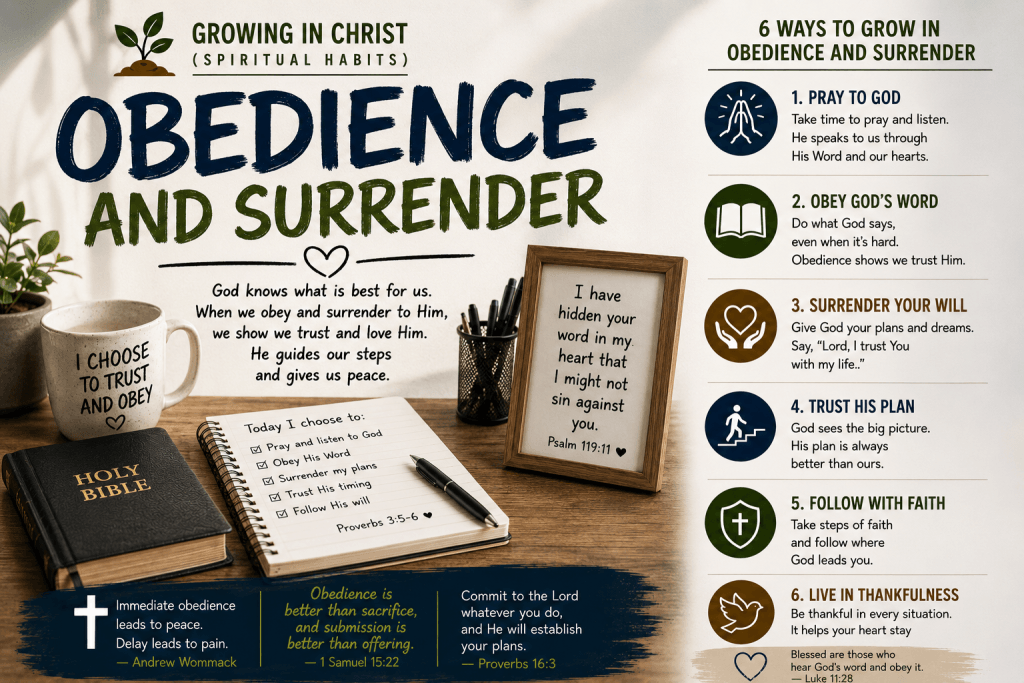
This lesson teaches that obedience and surrender are central to growing in Christ. Luke 9:23–24 establishes the foundation by showing that discipleship requires denying self, taking up the cross daily, and following Jesus. Romans 12:1–2 shows that believers respond to God’s mercy by offering themselves fully to Him and being transformed through renewed minds. John 14:15 teaches that love for Christ is expressed through obedience to His commands. James 1:22–25 warns against hearing the Word without doing it and calls believers to active, faithful response. Philippians 2:5–11 points to Jesus as the perfect example of humility, submission, and obedience. 1 Samuel 15:22 warns that outward religious activity cannot replace a surrendered heart that obeys God.The big idea of the Adult lesson is that true discipleship is not built on appearance, convenience, or partial surrender. It is a daily life of loving Christ, submitting to His Word, resisting self-rule, and obeying God with humility. The next faithful step is for each adult to identify one area where God is calling for deeper surrender and to respond with specific obedience, prayer, and trust.Adult Questions
- What common thread do you see across this lesson about the relationship between hearing God’s Word, loving Christ, surrendering self, and obeying God?Your personal thoughts are private and are not shared.
- How does the main teaching of this lesson help us understand that obedience is not merely rule-following but a response to God’s mercy, Christ’s lordship, and the transforming work of the Spirit?Your personal thoughts are private and are not shared.
- Where do you find obedience and surrender most difficult right now: denying self, renewing your mind, obeying Scripture, humbling yourself, or letting go of partial obedience?Your personal thoughts are private and are not shared.
- What is one concrete step of obedience God may be calling you to take this week at home, at church, at work, in your relationships, or in your private walk with Him?Your personal thoughts are private and are not shared.
- How can this group encourage one another through prayer, accountability, and testimony as we seek to follow Christ with humility and daily surrender?Your personal thoughts are private and are not shared.
Adult Prayer
Scripture Reading
- These notes are personal and are not shared.
- These notes are personal and are not shared.
- These notes are personal and are not shared.
- These notes are personal and are not shared.
- These notes are personal and are not shared.
- These notes are personal and are not shared.
Youth Explanation
Jesus was teaching His followers what it really means to be His disciple. Many people liked listening to Jesus and seeing His miracles, but Jesus made it clear that following Him is more than being interested in Him. He said that anyone who wants to follow Him must deny self, take up the cross daily, and follow Him. That means Jesus is not just part of life; He becomes the Lord over all of life.
Focus on the Scripture
The main focus is daily surrender. Jesus calls His followers to stop living as if they are in charge and to trust Him enough to obey Him each day. Teenagers should pay close attention to the word “daily” because following Jesus is not just something done at church, camp, or during an emotional moment. It is choosing Jesus at school, at home, with friends, online, and when no one else is watching.
Youth Application
* Start each day by asking Jesus to help you follow Him in your choices, attitude, words, and thoughts.
* Surrender one area where you know you have been wanting your way instead of God’s way.
* Choose obedience even when friends, social media, or culture push you in a different direction.
* Remember that following Jesus may cost comfort or popularity, but He gives true life.
* Pray honestly when surrender feels hard and ask God for strength to keep following Him.
Youth Summary
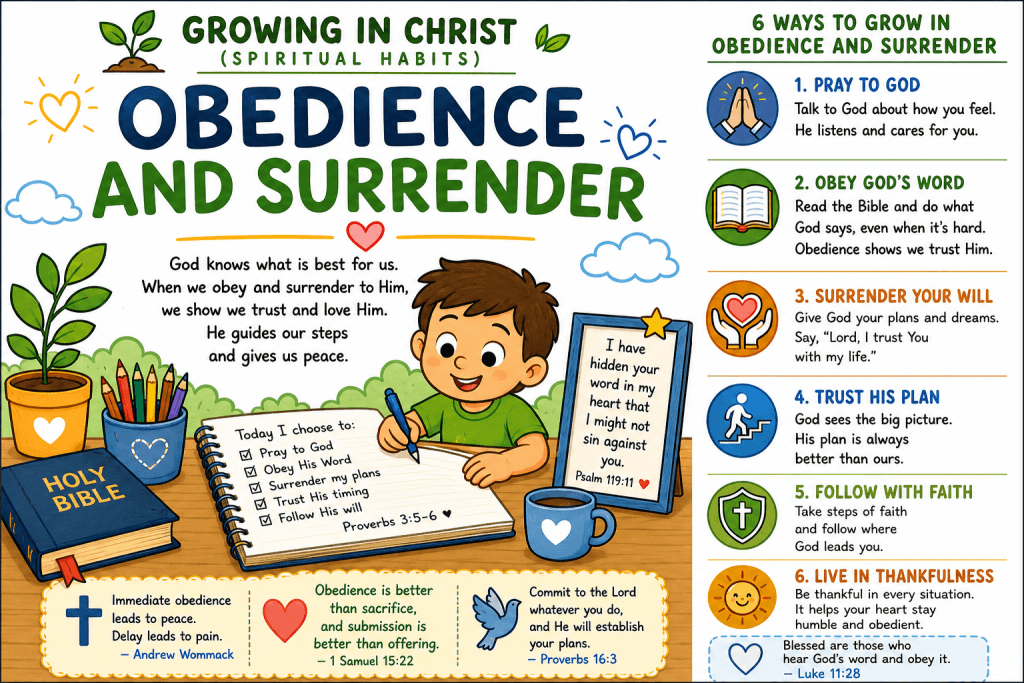
Following Jesus means more than saying we believe in Him. Luke 9:23–24 teaches that discipleship means denying ourselves, taking up our cross daily, and following Jesus. Romans 12:1–2 shows that surrender includes giving our whole lives to God and letting Him renew our minds. John 14:15 teaches that love for Jesus shows through obedience. James 1:22–25 reminds us not just to hear God’s Word but to live it. Philippians 2:5–11 points us to Jesus’ humility and obedience as our example. 1 Samuel 15:22 warns us not to replace real obedience with religious excuses.The big lesson is that obedience and surrender are part of daily discipleship. Jesus calls teenagers to follow Him at school, at home, online, in friendships, in private thoughts, and in church. The next faithful step is to ask God, “What is one area of my life You want me to surrender?” and then obey Him with trust, humility, and prayer.Youth Questions
- What do all these passages teach us about what real obedience and surrender look like in everyday life?Your personal thoughts are private and are not shared.
- Why is following Jesus more than just believing the right things or looking spiritual on the outside?Your personal thoughts are private and are not shared.
- What is one area where surrendering to Jesus feels difficult for students your age?Your personal thoughts are private and are not shared.
- What is one specific way you can obey God this week at home, school, church, online, or with friends?Your personal thoughts are private and are not shared.
- How can this group help each other grow in obedience, humility, prayer, and surrender to Jesus?Your personal thoughts are private and are not shared.
Youth Prayer
Scripture Reading
- These notes are personal and are not shared.
- These notes are personal and are not shared.
- These notes are personal and are not shared.
- These notes are personal and are not shared.
- These notes are personal and are not shared.
- These notes are personal and are not shared.
Children Explanation
Jesus was teaching people what it means to follow Him. Some people liked hearing Jesus teach, but Jesus wanted them to know that following Him means listening to Him and doing what He says. Jesus said His followers must say no to their own selfish way and follow Him every day. That means Jesus helps us obey at home, at church, at school, with friends, and when no one else is watching.
Focus on the Scripture
The main lesson is that following Jesus means obeying Him every day. Children should notice that Jesus wants our whole heart, not just our words. This passage helps children learn to trust Jesus, listen to Him, and choose His way instead of always wanting their own way.
Children Application
* Ask Jesus each morning to help you follow Him.
* Say no to selfish choices and yes to what Jesus says.
* Obey your parents, teachers, and leaders with a willing heart.
* Choose kindness when you want your own way.
* Pray when obeying feels hard.
Children Summary
Jesus wants children to follow Him with their whole hearts. Luke 9:23–24 teaches us to follow Jesus every day. Romans 12:1–2 reminds us that our whole lives can belong to God. John 14:15 teaches that loving Jesus means obeying Him. James 1:22–25 reminds us to do what God’s Word says. Philippians 2:5–11 shows us that Jesus is humble and obeys God. 1 Samuel 15:22 teaches us not to make excuses but to obey God with honest hearts.The big lesson is that obedience and surrender mean choosing God’s way instead of our own way. Children can follow Jesus by listening, helping, praying, forgiving, telling the truth, and obeying at home, school, church, and with friends.Children Questions
- What do these passages teach us about following Jesus and obeying God?Your personal thoughts are private and are not shared.
- Why is it important to obey God instead of only saying we love Him?Your personal thoughts are private and are not shared.
- When is it hard for you to obey, trust God, or give up your own way?Your personal thoughts are private and are not shared.
- What is one way you can obey Jesus this week at home, school, church, or with friends?Your personal thoughts are private and are not shared.
- How can we pray for each other and help each other follow Jesus?Your personal thoughts are private and are not shared.
Children Prayer
Children Printable Images
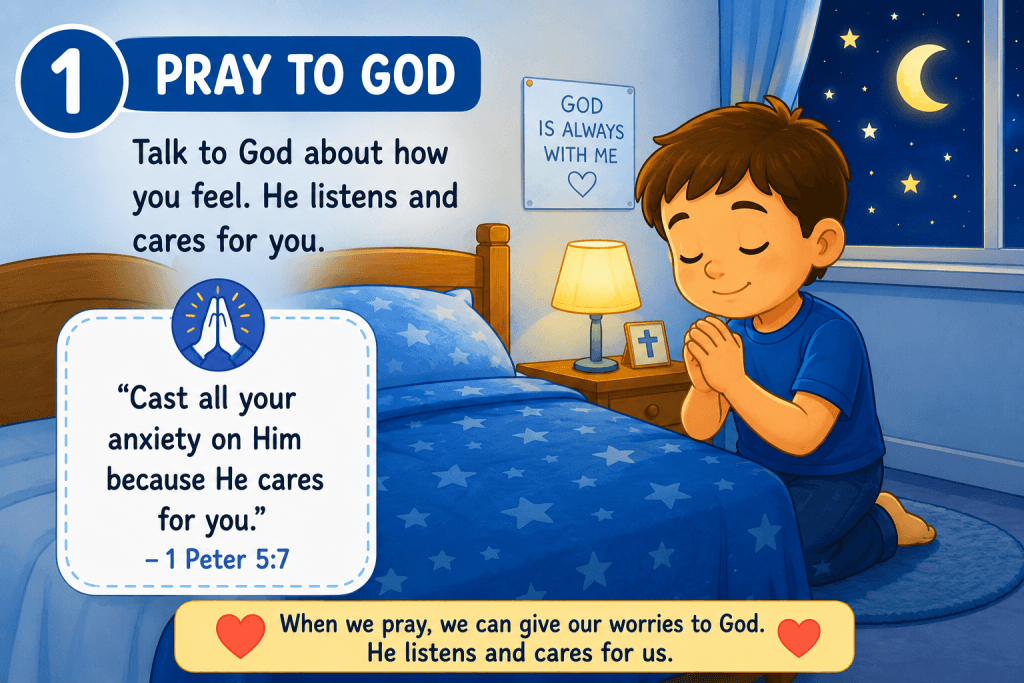
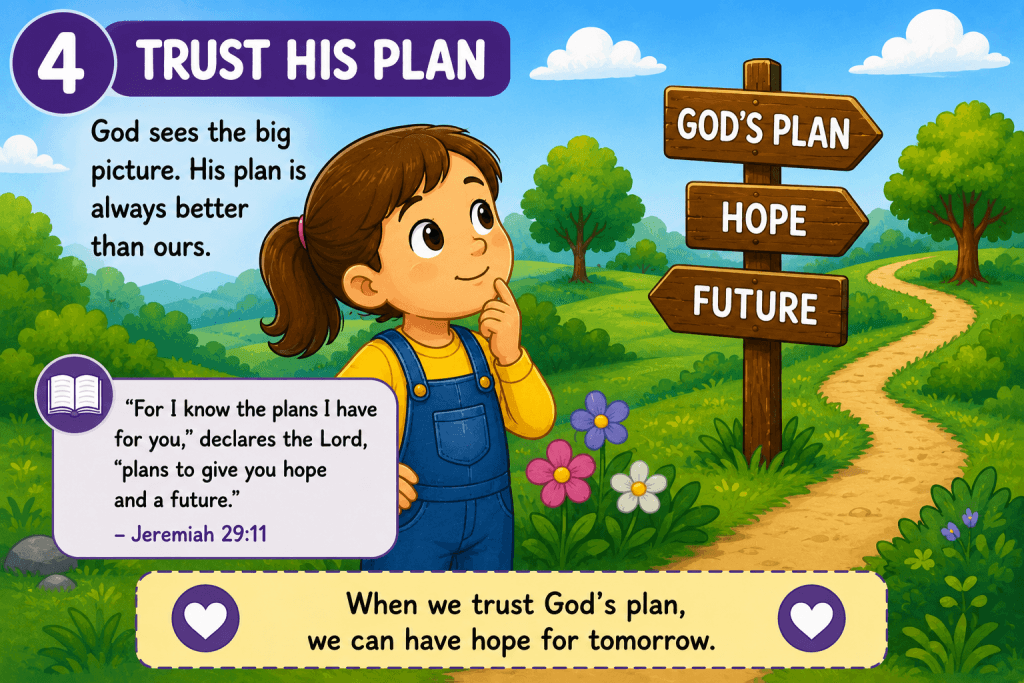
These images are provided as printable lesson pages for children.



Children Coloring Pages
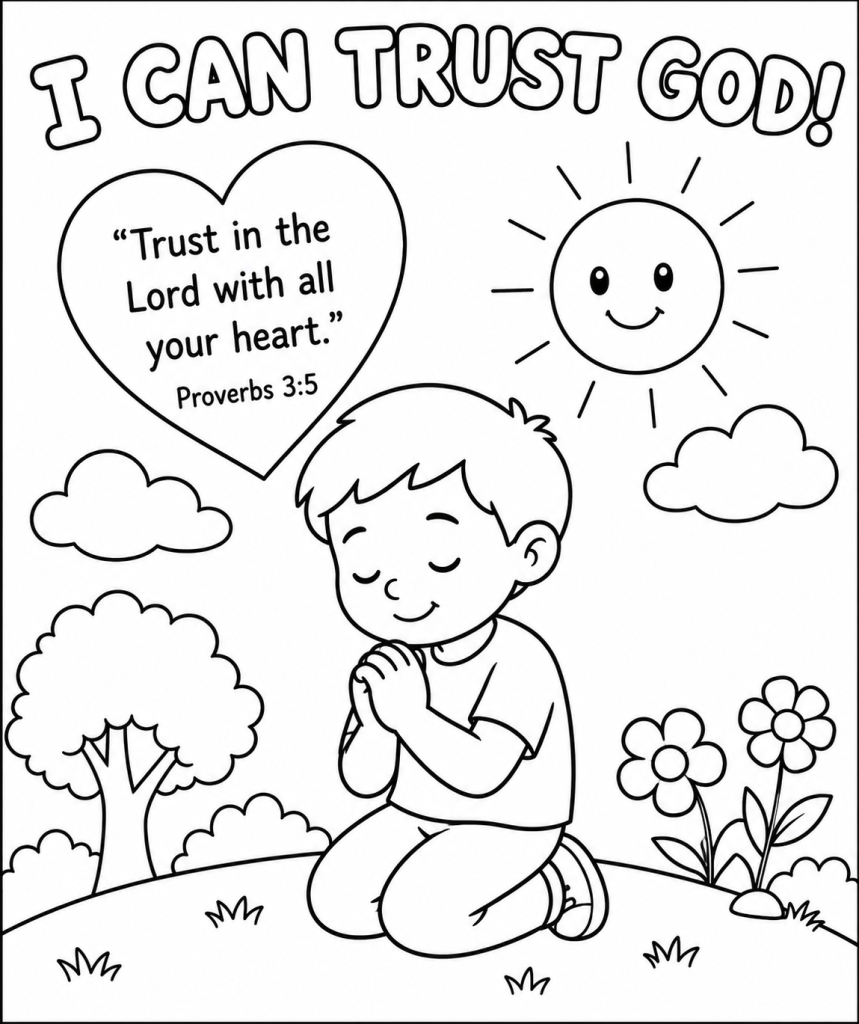
These coloring pages are provided as printable activities for children.

Ready to Finish?
Mark this lesson complete to update your My Harvest progress.