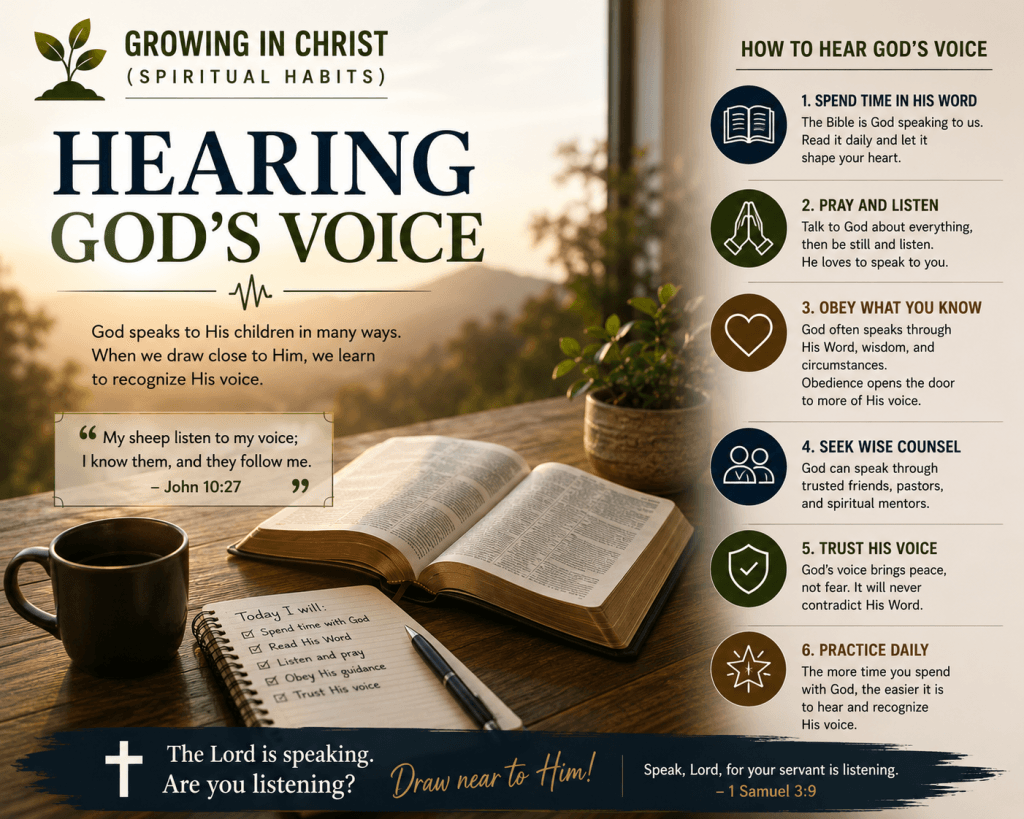
Hearing God’s Voice

Lesson Information
This lesson helps learners understand Hearing God’s Voice through the truth of Scripture. Using John 10:27 as the foundation, the lesson connects biblical meaning with everyday discipleship so adults, youth, and children can understand what God says, why it matters, and how to live it out through Listening, Discernment, Scripture, Guidance, and Obedience.
Content
Scripture Reading
- These notes are personal and are not shared.
- These notes are personal and are not shared.
- These notes are personal and are not shared.
- These notes are personal and are not shared.
- These notes are personal and are not shared.
- These notes are personal and are not shared.
Adult Passage 1
27 My sheep hear My voice, and I know them, and they follow Me;
Adult Explanation
In John 10, Jesus presents Himself as the Good Shepherd who lovingly cares for, protects, and leads His sheep. He contrasts His relationship with true believers against false shepherds and thieves who seek to harm God's people. Jesus uses the familiar image of shepherds and sheep to explain how believers relate to Him. Sheep learn to recognize the voice of their shepherd and willingly follow him because they trust him. In the same way, followers of Christ learn to recognize His voice through Scripture, the work of the Holy Spirit, and a growing relationship with Him. This passage provides a foundational understanding of what it means to hear God's voice as a disciple.
Focus on the Scripture
The central truth of this passage is that genuine followers of Jesus know His voice and respond by following Him. Hearing God's voice is not primarily about seeking mystical experiences but about developing a relationship with Christ through His Word and obeying His leading. Believers should pay close attention to the connection between hearing, knowing, and following. The evidence that we recognize Christ's voice is seen in our willingness to trust and obey Him.
Adult Exegesis
Keyword Study
Hear — Greek: <em>akouo</em> (ah-KOO-oh). This word means to hear, listen, understand, or respond. In Scripture, hearing often involves more than receiving sound; it includes receiving truth and acting upon it.
Follow — Greek: <em>akoloutheo</em> (ah-ko-loo-THEH-oh). This term means to accompany, follow after, or become a disciple of someone. It describes a life of ongoing obedience and devotion to Christ.
Jesus describes an intimate relationship between Himself and His people. His sheep hear His voice because they belong to Him. The ability to recognize Christ's voice flows from relationship, not from spiritual achievement. As believers spend time in Scripture, prayer, worship, and fellowship, they become increasingly familiar with the character and truth of their Shepherd.
This verse also highlights the certainty of Christ's knowledge of His people. Jesus says, "I know them." Believers are not anonymous followers. They are personally known, loved, and cared for by the Lord. This personal relationship creates confidence when seeking God's guidance because the Shepherd is committed to leading His sheep faithfully.
Within the broader context of John's Gospel, Jesus consistently reveals Himself as the fulfillment of God's promises and the source of eternal life. Hearing God's voice must always be evaluated through the person and teaching of Christ. Any guidance that contradicts Scripture cannot be the voice of the Good Shepherd. True discernment begins with knowing Christ and His Word.
Adult Application
* Spend regular time reading Scripture so you become more familiar with the voice and character of Christ.
* Practice obedience when God reveals truth through His Word rather than delaying your response.
* Test impressions, advice, and spiritual experiences against biblical teaching and the example of Jesus.
* Pray daily for wisdom and discernment as you seek God's guidance for decisions and relationships.
* Strengthen your relationship with Christ through worship, prayer, and consistent fellowship with believers.
---
Adult Passage 2
9 And Eli said to Samuel, “Go lie down, and it shall be if He calls you, that you shall say, ‘Speak, Lord, for Your servant is listening.’” So Samuel went and lay down in his place.
10 Then the Lord came and stood and called as at other times, “Samuel! Samuel!” And Samuel said, “Speak, for Your servant is listening.”
Adult Explanation
This passage occurs during a spiritually difficult period in Israel's history. The nation was struggling, and the word of the Lord was rare. Samuel was serving in the tabernacle under Eli the priest when God called him during the night. At first Samuel did not recognize that it was the Lord speaking to him. After Eli understood what was happening, he instructed Samuel to respond with humility and readiness. Samuel's response became a model of listening attentively to God. This passage teaches important principles about hearing God's voice with humility, patience, and willingness to obey.
Focus on the Scripture
The main focus of this passage is the posture of a servant who is ready to listen to God. Samuel's response demonstrates humility, attentiveness, and submission. Believers should pay attention to the fact that hearing from God begins with a willing heart. God often speaks to people who are prepared to listen, learn, and obey what He reveals.
Adult Exegesis
Keyword Study
Speak — Hebrew: <em>dabar</em> (dah-BAR). This common Hebrew word means to speak, declare, or communicate. It emphasizes God's initiative in revealing Himself and His truth.
Listening — Hebrew: <em>shama</em> (shah-MAH). This word means to hear, listen attentively, and obey. In biblical usage, hearing and obedience are closely connected.
Samuel's experience reminds believers that recognizing God's voice often develops over time. Samuel was young and inexperienced, yet God was patient with him. This encourages believers who desire greater discernment. Spiritual maturity grows through consistent exposure to God's truth and faithful responsiveness to His leading.
The phrase "Speak, for Your servant is listening" reveals a heart of surrender. Samuel did not approach God with demands or conditions. Instead, he positioned himself as a servant ready to receive instruction. This attitude remains essential for Christians today. Many people seek guidance while resisting obedience, but Scripture presents listening and submission as inseparable.
This passage also highlights God's desire to communicate with His people. Throughout Scripture, God reveals Himself through His Word, His prophets, and ultimately through His Son. The account of Samuel points forward to the greater revelation found in Christ and teaches believers to approach God's Word with expectancy, humility, and reverence.
Adult Application
* Begin Bible reading and prayer with a willing attitude that says, "Lord, I am ready to listen."
* Remove distractions during personal devotional time so you can focus more carefully on God's Word.
* Ask God to develop greater discernment as you seek His guidance in important decisions.
* Respond promptly when Scripture reveals a change God wants you to make in your life.
* Cultivate humility by approaching God's Word as a servant who desires to learn and obey.
---
Adult Passage 3
105 Your word is a lamp to my feet And a light to my path.
Adult Explanation
Psalm 119 is a celebration of God's Word and its importance in the life of faith. Throughout the psalm, the writer repeatedly expresses love for God's instruction and dependence upon His truth. In this verse, Scripture is described as a lamp and a light that guides believers through life's journey. Rather than leaving His people to navigate life's challenges alone, God provides direction through His revealed Word. This verse teaches that hearing God's voice is closely connected to knowing and following Scripture.
Focus on the Scripture
The primary truth of this passage is that God's Word provides guidance for daily living. Believers should pay close attention to the fact that God's guidance often comes through the steady light of Scripture rather than dramatic signs or experiences. The Bible illuminates the path ahead and helps Christians make wise, God-honoring decisions.
Adult Exegesis
Keyword Study
Lamp — Hebrew: <em>ner</em> (nare). This word refers to a small lamp used to provide light in darkness. It emphasizes practical guidance for immediate steps.
Light — Hebrew: <em>or</em> (ore). This term signifies illumination, revelation, and clarity. God's truth enables believers to see life from His perspective.
The imagery of a lamp suggests that God often provides guidance one step at a time. Believers frequently desire complete knowledge of the future, but Scripture teaches dependence upon God for daily direction. The light of God's Word is sufficient for faithful obedience in the present moment.
This verse also reminds believers that the world contains spiritual darkness, confusion, and competing voices. Human wisdom alone cannot provide the guidance necessary for faithful discipleship. God's Word serves as the reliable standard that exposes error and directs believers toward truth.
Within the larger theme of Psalm 119, this passage reinforces the importance of regular engagement with Scripture. The believer who consistently studies, meditates upon, and obeys God's Word develops greater discernment and confidence in recognizing God's guidance. Hearing God's voice becomes clearer as the mind is shaped by biblical truth.
Adult Application
* Read Scripture daily before making important decisions or seeking direction elsewhere.
* Memorize key verses that provide guidance during seasons of uncertainty or difficulty.
* Use biblical truth as the standard for evaluating advice, opportunities, and personal desires.
* Spend time meditating on Scripture rather than rushing through Bible reading.
* Ask God in prayer to help you recognize His guidance through the truths of His Word.
Adult Passage 4
21 Your ears will hear a word behind you, “This is the way, walk in it,” whenever you turn to the right or to the left.
Adult Explanation
Isaiah 30 speaks to a people who were tempted to seek help and security apart from the Lord. Judah was looking toward human alliances and worldly strategies instead of trusting God’s instruction and guidance. In the middle of correction and warning, this passage gives a gracious picture of God directing His people in the way they should walk. The Lord does not abandon His people to confusion. He calls them back, teaches them, and guides them in the right path. For believers learning to hear God’s voice, this passage reminds us that God’s guidance must be received with humility, repentance, and obedience.
Focus on the Scripture
The main promise and discipleship focus is that God faithfully guides His people in the way they should go. Adults should pay close attention to the phrase of direction in the passage. God’s voice is not given to satisfy curiosity but to lead His people into faithful obedience. Hearing God’s voice means learning to recognize His correction, trust His guidance, and walk in the path He reveals.
Adult Exegesis
Keyword Study
Way — Hebrew: <em>derek</em> (DEH-rek). This word means road, path, journey, or manner of life. It helps explain that God’s guidance is not only about one decision but about the whole direction of a believer’s life.
Walk — Hebrew: <em>halak</em> (hah-LAHK). This word means to go, walk, live, or conduct oneself. In Scripture, walking often describes a pattern of life before God.
Isaiah’s message shows that hearing God’s voice is deeply connected to repentance and trust. Judah wanted security without surrender, direction without dependence, and help without obedience. God’s gracious promise of guidance comes within a call to stop relying on human wisdom and return to Him. This remains important for believers today, because our hearts can still seek direction from God while clinging to self-reliance.
The picture of hearing direction behind them emphasizes God’s personal and faithful guidance. The Lord is not distant from His people. He instructs, corrects, and redirects them. Yet His guidance is not meant to be separated from His revealed truth. God does not lead His people into sin, confusion, pride, or rebellion. His voice guides them into the way that is consistent with His character and Word.
This passage fits the larger story of Scripture by showing God as the faithful Shepherd and Teacher of His people. In John 10:27, Jesus says His sheep hear His voice and follow Him. Isaiah 30:21 gives an Old Testament picture of that same gracious guidance: God speaks so His people will walk rightly. The proper response is not merely to notice His direction but to obey it.
Adult Application
* When seeking guidance, first ask whether your heart is surrendered to obey what God has already revealed.
* Evaluate decisions by asking whether they move you toward faithfulness, holiness, and trust in God.
* Be willing to receive correction when God’s Word redirects your plans, habits, or attitudes.
* Practice listening in prayer with Scripture open, allowing God’s Word to guide your next obedient step.
* Help your family or small group discern God’s direction by pointing them back to biblical truth rather than personal opinion.
---
Adult Passage 5
14 For all who are being led by the Spirit of God, these are sons of God.
Adult Explanation
Romans 8 explains the life of believers who belong to Christ and live by the Spirit rather than by the flesh. Paul contrasts the old way of life dominated by sin with the new life given through the Holy Spirit. In this verse, he identifies those who are led by the Spirit of God as sons of God. This does not mean believers are guided by random feelings or uncontrolled impulses. Rather, the Spirit leads God’s children in ways that agree with God’s Word, produce holiness, and confirm their belonging to the Father. This passage is important for understanding that hearing God’s voice includes Spirit-led obedience rooted in the truth of Scripture.
Focus on the Scripture
The central truth is that God’s children are led by His Spirit. Adults should pay close attention to the connection between identity and guidance. Believers do not listen for God’s voice as strangers trying to earn attention; they listen as children who belong to the Father. The Spirit leads Christians away from sin and toward obedience, assurance, holiness, and Christlike living.
Adult Exegesis
Keyword Study
Led — Greek: <em>ago</em> (AH-go). This word means to lead, bring, guide, or direct. In this passage, it describes the Spirit’s active guidance in the life of the believer.
Sons — Greek: <em>huios</em> (hwee-OSS). This word means son and often carries the idea of relationship, inheritance, and recognized family identity. Paul uses it to describe believers as those who belong to God through Christ.
Romans 8 teaches that the Spirit’s leadership is not detached from moral transformation. The surrounding verses speak about putting to death the deeds of the body and living according to the Spirit. Therefore, being led by the Spirit includes being guided away from sin and into a life that reflects God’s holiness. Any claimed guidance that excuses disobedience or contradicts Scripture should be rejected.
This verse also gives comfort and assurance. The Spirit’s leading is a mark of belonging to God. Believers are not left to navigate the Christian life in their own strength. The same Spirit who gives life also guides, convicts, comforts, and empowers. Hearing God’s voice, then, is not merely about discovering what to do next; it is about walking as a child of God under the loving leadership of the Spirit.
In the larger biblical story, the Spirit leads believers to become more like Christ. The Son obeyed the Father perfectly, and the Spirit now shapes God’s adopted children into Christlike obedience. John 10:27 teaches that Christ’s sheep hear and follow His voice. Romans 8:14 shows that this following happens through the Spirit’s work in those who belong to God.
Adult Application
* Ask the Holy Spirit to help you recognize and obey God’s guidance through Scripture.
* Test inner impressions by whether they align with biblical truth and lead toward holiness.
* Remember that you listen to God as His child, not as someone trying to earn His love.
* When convicted of sin, respond as a Spirit-led believer by repenting and choosing obedience.
* Look for the Spirit’s fruit in your decisions, relationships, speech, and private habits.
---
Adult Passage 6
12 For the word of God is living and active and sharper than any two-edged sword, and piercing as far as the division of soul and spirit, of both joints and marrow, and able to judge the thoughts and intentions of the heart.
Adult Explanation
Hebrews was written to believers who needed encouragement to remain faithful and not drift away from God’s promises. In the surrounding context, the author warns against hardened hearts and urges believers to respond to God’s Word with faith and obedience. Hebrews 4:12 describes the Word of God as living, active, and penetrating. This passage is vital for understanding hearing God’s voice because it shows that Scripture is not silent or powerless. God speaks through His Word in a way that reaches the heart, exposes motives, and calls for a faithful response.
Focus on the Scripture
The main truth is that God’s Word actively reveals what is inside the human heart. Adults should pay attention to the searching power of Scripture. Hearing God’s voice is not only about receiving comfort or direction; it also involves allowing God’s Word to examine our thoughts, motives, desires, and obedience. The Word of God helps believers discern truth, recognize sin, and respond to God with humility.
Adult Exegesis
Keyword Study
Living — Greek: <em>zao</em> (DZAH-oh). This word means to live or have life. Describing God’s Word as living shows that Scripture continues to speak with power because it comes from the living God.
Active — Greek: <em>energes</em> (en-er-GACE). This word means effective, powerful, or at work. It explains that God’s Word accomplishes His purposes and is not merely information to be observed.
The author of Hebrews presents Scripture as an instrument of divine examination. God’s Word reaches beyond outward appearance and exposes the inner life. It reveals whether faith is genuine, whether obedience is sincere, and whether the heart is becoming hardened. This is why hearing God’s voice through Scripture requires humility. The Bible does not simply affirm what we already want; it confronts and corrects us.
The imagery of piercing division emphasizes the depth of God’s Word. Human beings often struggle to understand their own motives, but God’s Word discerns what we cannot clearly see. It helps believers distinguish between spiritual wisdom and self-deception, between obedience and compromise, between faith and fear.
This passage also strengthens the believer’s confidence in Scripture as the primary place to hear God’s voice. God’s Word is living and active because God Himself speaks through it. While believers may seek wisdom through prayer, counsel, and circumstances, all guidance must be tested by Scripture. The voice of the Shepherd will never contradict the Word He has given.
Adult Application
* Approach Scripture with humility, asking God to reveal what is truly happening in your heart.
* Let God’s Word correct hidden motives, private sin, fear, pride, or resistance to obedience.
* Use Scripture to discern whether a decision is guided by faith or by comfort, pressure, or selfish desire.
* When Bible reading feels convicting, respond with repentance and trust rather than defensiveness.
* Make Scripture the final authority when weighing advice, impressions, emotions, and circumstances.
---
Adult Summary
This lesson teaches that hearing God’s voice is rooted in relationship with Christ, shaped by Scripture, confirmed by the Spirit, and proven through obedience. John 10:27 gives the foundation: Jesus’ sheep hear His voice, are known by Him, and follow Him. Hearing God is not separated from discipleship; those who recognize the Shepherd’s voice respond by trusting and obeying Him.The supporting passages help explain what that looks like in daily life. In 1 Samuel 3:9–10, Samuel models a humble listening posture before the Lord. Psalm 119:105 shows that God’s Word gives light and guidance for each step. Isaiah 30:21 reminds believers that God faithfully directs His people in the way they should walk. Romans 8:14 teaches that God’s children are led by the Spirit in ways that produce holiness and confirm their identity in Him. Hebrews 4:12 shows that God’s Word is living and active, able to search the heart, expose motives, and lead believers into truth.The big idea of the Adult lesson is that hearing God’s voice is not about chasing spiritual novelty but about learning to recognize the Shepherd through His Word, respond to the Spirit’s leading, discern truth from error, and walk in obedience. The next faithful step for adults is to practice daily listening through Scripture and prayer, test every voice by God’s Word, surrender areas of resistance, and follow Christ with trust-filled obedience.Adult Questions
- Across the full lesson, what do these passages teach us about the relationship between hearing God’s voice and following Him in obedience?Your personal thoughts are private and are not shared.
- How does Scripture help us understand the difference between God’s guidance and our own desires, emotions, or outside influences?Your personal thoughts are private and are not shared.
- Where do you find it hardest to listen to God with a surrendered heart, and what might be keeping you from obeying His direction?Your personal thoughts are private and are not shared.
- What is one specific way you can practice listening to God through Scripture, prayer, discernment, and obedience this week?Your personal thoughts are private and are not shared.
- How can this group encourage one another to recognize Christ’s voice more clearly, test guidance biblically, and follow Him faithfully?Your personal thoughts are private and are not shared.
Adult Prayer

Scripture Reading
- These notes are personal and are not shared.
- These notes are personal and are not shared.
- These notes are personal and are not shared.
- These notes are personal and are not shared.
- These notes are personal and are not shared.
- These notes are personal and are not shared.
Youth Explanation
Jesus uses the picture of a shepherd and sheep to explain His relationship with His followers. Sheep learn the voice of their shepherd because they spend time near him and depend on him for care, protection, and direction. Jesus says that His sheep hear His voice, He knows them, and they follow Him. This helps us understand that hearing God’s voice is connected to knowing Jesus and obeying Him.
Focus on the Scripture
The main truth is that followers of Jesus learn to recognize His voice and follow Him. Teenagers should pay attention to the connection between listening and obeying. Hearing God’s voice is not just about feeling something spiritual. It means knowing Jesus through His Word, trusting His guidance, and following Him in everyday choices.
Youth Application
* Spend time in Scripture so you can better recognize what sounds like Jesus and what does not.
* When God’s Word shows you the right path, choose obedience instead of delay.
* Test advice, feelings, and online voices by asking if they agree with Scripture.
* Pray before decisions and ask Jesus to help you follow His voice.
* Remember that Jesus knows you personally and leads you as your Shepherd.
---
Youth Summary
Hearing God’s voice means learning to recognize Jesus, trust His Word, and follow Him in obedience. John 10:27 teaches that Jesus’ sheep hear His voice, are known by Him, and follow Him. Samuel shows us the attitude of a humble listener. Psalm 119:105 reminds us that Scripture gives light for our next step. Isaiah 30:21 shows that God guides His people in the way they should walk. Romans 8:14 teaches that God’s children are led by His Spirit. Hebrews 4:12 reminds us that God’s Word is living and active, reaching deep into our hearts.For teenagers, this means God’s voice should be louder than pressure, popularity, fear, social media, or personal feelings. The next faithful step is to spend time in Scripture, pray with a willing heart, test every voice by God’s Word, and obey Jesus in everyday life.Youth Questions
- What do these passages teach us about how God guides His people?Your personal thoughts are private and are not shared.
- How can we tell the difference between God’s voice and other voices like feelings, pressure, opinions, or social media?Your personal thoughts are private and are not shared.
- What makes it hard for you to listen to God and obey Him?Your personal thoughts are private and are not shared.
- What is one way you can practice listening to God through Scripture and prayer this week?Your personal thoughts are private and are not shared.
- How can our group help each other follow Jesus’ voice instead of drifting toward the wrong voices?Your personal thoughts are private and are not shared.
Youth Prayer

Scripture Reading
- These notes are personal and are not shared.
- These notes are personal and are not shared.
- These notes are personal and are not shared.
- These notes are personal and are not shared.
- These notes are personal and are not shared.
- These notes are personal and are not shared.
Children Explanation
Jesus said His sheep hear His voice and follow Him. Jesus was not talking about farm animals only. He was teaching that He is like a good Shepherd, and His people are like sheep who belong to Him. A sheep learns the voice of its shepherd and follows him. We learn to listen to Jesus by hearing the Bible, praying, and obeying what He says.
Focus on the Scripture
The main truth is that Jesus knows His people and leads them. Children should notice that hearing Jesus means listening to His Word and following Him. This helps children trust Jesus, obey Him, and remember that He is their caring Shepherd.
Children Application
* Listen carefully when the Bible is read.
* Ask Jesus to help you follow Him.
* Obey what Jesus teaches.
* Remember that Jesus knows and loves you.
* Choose Jesus’ way when you have a choice to make.
---
Children Summary
Jesus is the Good Shepherd, and His people learn to listen to Him and follow Him. God speaks through His Word, the Bible. Samuel teaches us to listen with a ready heart. Psalm 119 teaches us that God’s Word is like a light that guides our path. Isaiah reminds us that God shows His people the right way. Romans teaches that God leads His children by His Spirit. Hebrews reminds us that God’s Word is living and powerful and helps us see what is in our hearts.The big lesson is that children can learn to hear God by listening to the Bible, praying, asking for help, and obeying Jesus. God loves His children and helps them follow the right way.Children Questions
- What did we learn about how God helps His people listen and follow Him?Your personal thoughts are private and are not shared.
- Why is the Bible important when we want to know God’s voice?Your personal thoughts are private and are not shared.
- Is there a time when it is hard for you to listen and obey God?Your personal thoughts are private and are not shared.
- What is one way you can listen to God’s Word and follow Jesus this week?Your personal thoughts are private and are not shared.
- How can we pray for each other to hear God’s truth and obey Him?Your personal thoughts are private and are not shared.
Children Prayer
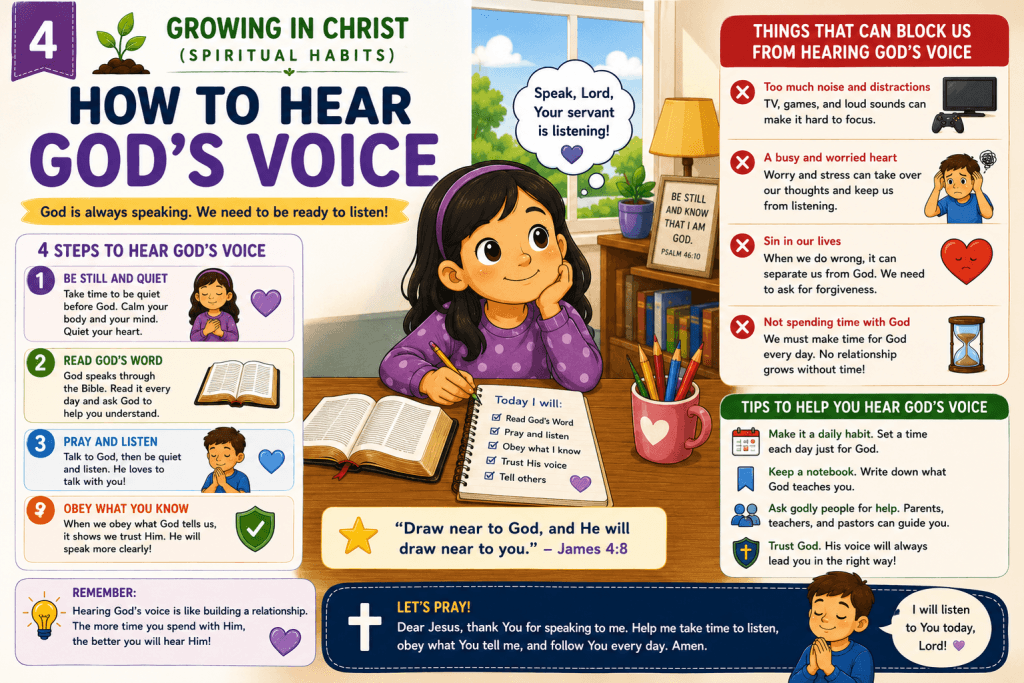
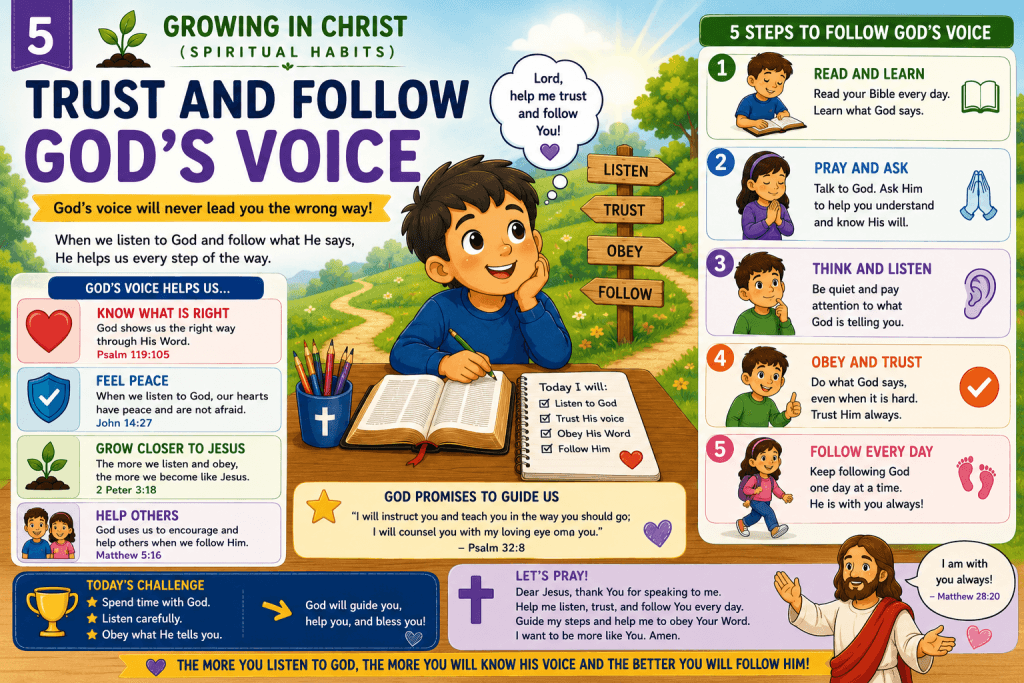
Children Printable Images
These images are provided as printable lesson pages for children.


Children Coloring Pages
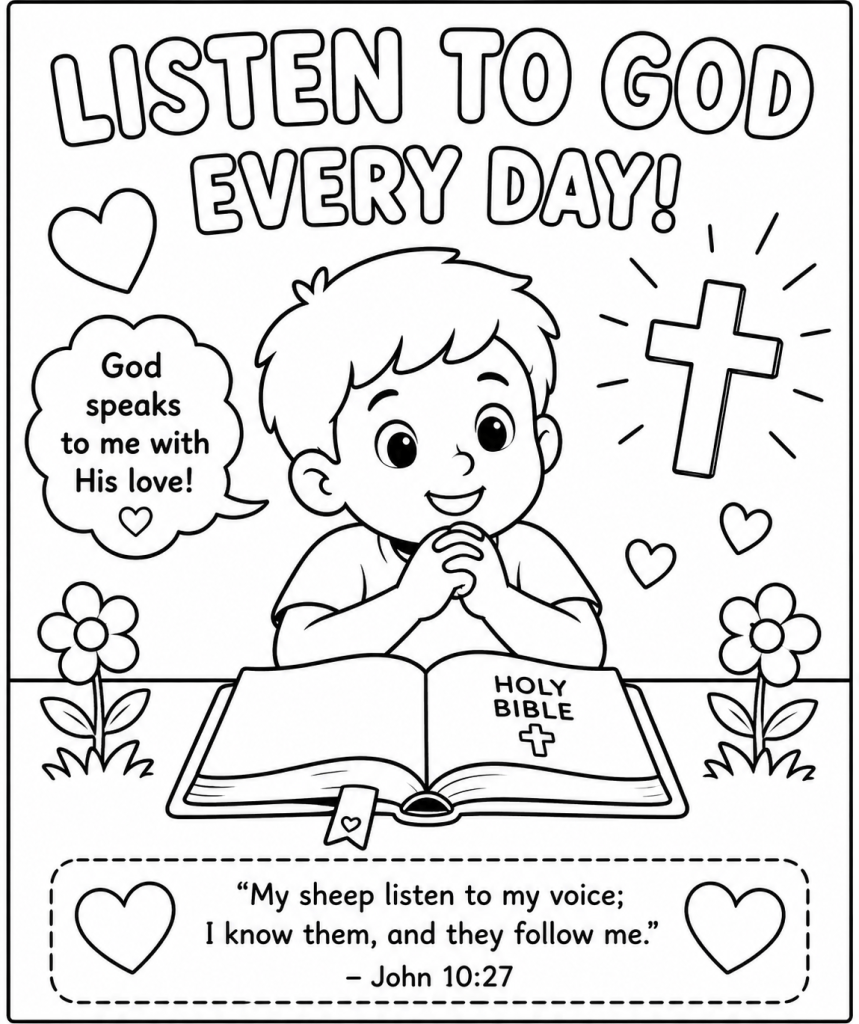
These coloring pages are provided as printable activities for children.